Remembering Felix Patrick Dempsey Part 2

Felix Patrick Dempsey’s war record
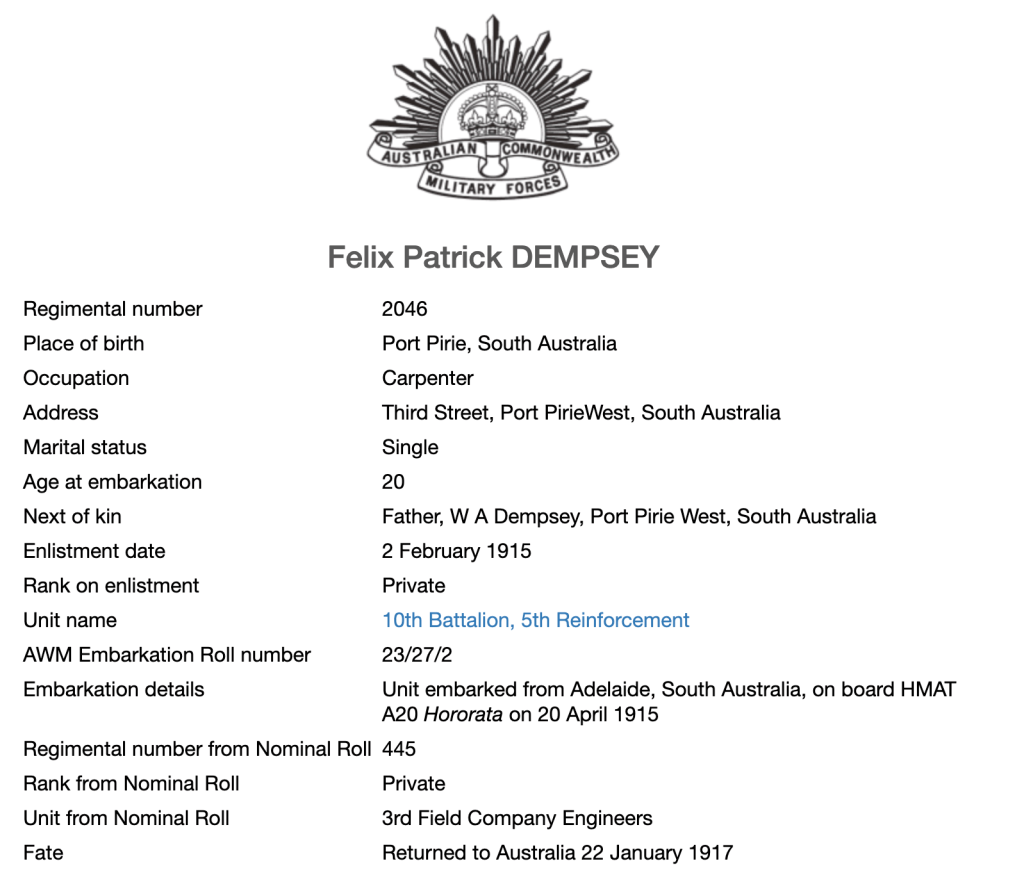
According to Australian War Memorial records, Felix Patrick Dempsey enlisted at age 20 on 2 February 1915. His occupation was listed as carpenter. His Certificate of Medical Examination describes him thus: height 5 feet 8½ inches, weight 134 lbs., healthy complexion, grey eyes, dark brown hair. He was a young man from a small country town, one of many who set off to fight in the Great War, with no idea of the horrors which lay ahead of them. He was a member of the 10th Battalion which was established in South Australia and served at Gallipoli, in Egypt and on the Western Front. The 5th Reinforcement, of which Felix was a member, joined the 10th Battalion on the Gallipoli Peninsula soon after the initial landing.

After enlisting Felix attended a Signalling School at Broadmeadows before embarking on the troopship Hororata from Adelaide on 20 April 1915. The Hororata was owned by the New Zealand Shipping Company and leased by the Commonwealth Government until 1917.1
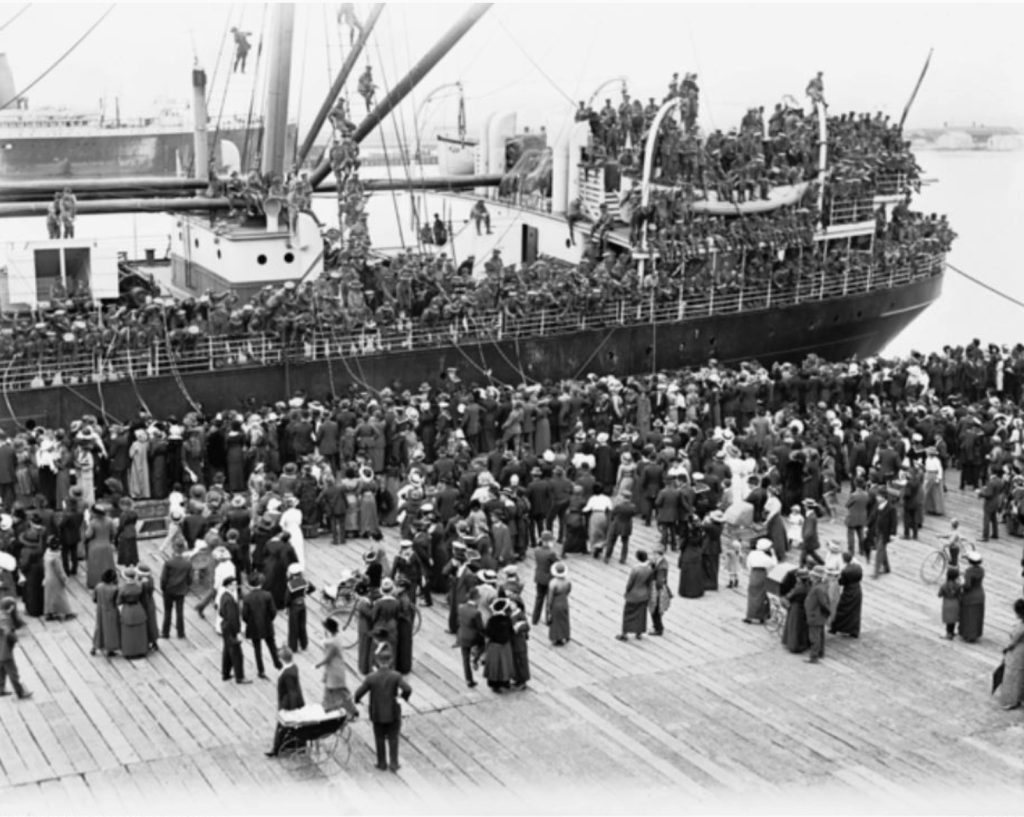
Troops prior to boarding HMAT Hororata, 17 April 1915 in Melbourne. The ship stopped in Adelaide a few days later to pick up more troops. Source: Australian War Memorial

I was fortunate to find the details of Felix’ service record on the National Archives of Australia website, with 21 pages of original documents. This was an invaluable resource.

The soldiers disembarked the Hororata at Port Said. After a month’s training in Egypt, the troops then embarked for Gallipoli. Felix fought on Gallipoli for 10 weeks. While there he was transferred to the 3rd Field Company Engineers with the rank of Sapper.2 Sappers specialized in combat engineering tasks such as building bridges, demolition work, and laying and clearing minefields. Sappers were trained to both fight as infantry and perform specialized engineering tasks.

After 10 weeks service on the battlefront at Gallipoli, Felix was suffering from shell shock and dysentery. He was sent to No 4 Auxiliary Hospital, Abbassia, a suburb of Cairo. When he was considered sufficiently recovered he was sent to a Convalescent hospital for sick and wounded soldiers at Helouan, a suburb of southern Cairo. Felix was a patient at this Convalescent Hospital at the approximate time this photograph was taken.3
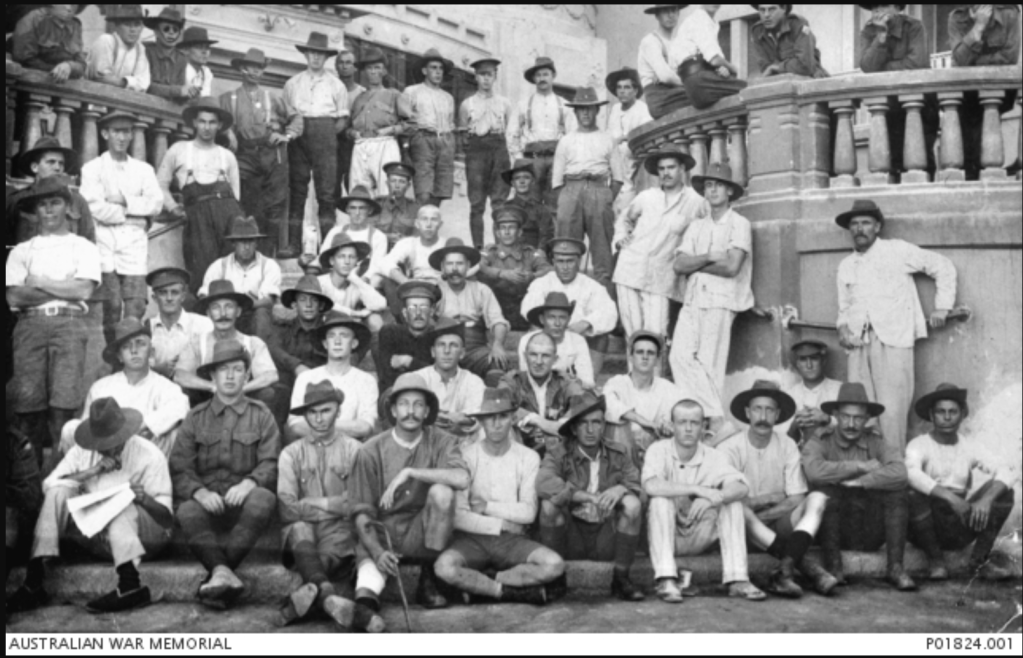
Helouan, Egypt, 1915-11-14. Large group portrait of sick and injured Australian soldiers gathered on the steps of the hospital at which they were recovering

He later went back to light duty camp at Zeitoun, another Cairo suburb. He volunteered to go back to Gallipoli again in early November 1915, but only reached Lemnos Island in the northern Aegean Sea when he had an attack of Malaria. Malaria is a serious illness which can lead to seizures, organ failure and death if not treated swiftly. Felix was sent to the 16th Stationary Hospital, a medical unit stationed at East Mudros on the island of Lemnos during the Gallipoli campaign where he remained until 23 December. This medical unit served as a critical care point for wounded and sick Australian and Allied soldiers during 1915 until it was transferred to Egypt in January 1916.

From the hospital on Lemnos, Felix was sent to the No. 1 Australian Auxiliary Hospital which had been established in a park adjacent to the 1st Australian General Hospital at Heliopolis, on the outskirts of Cairo. This photo gives us some idea of the conditions in this hospital.
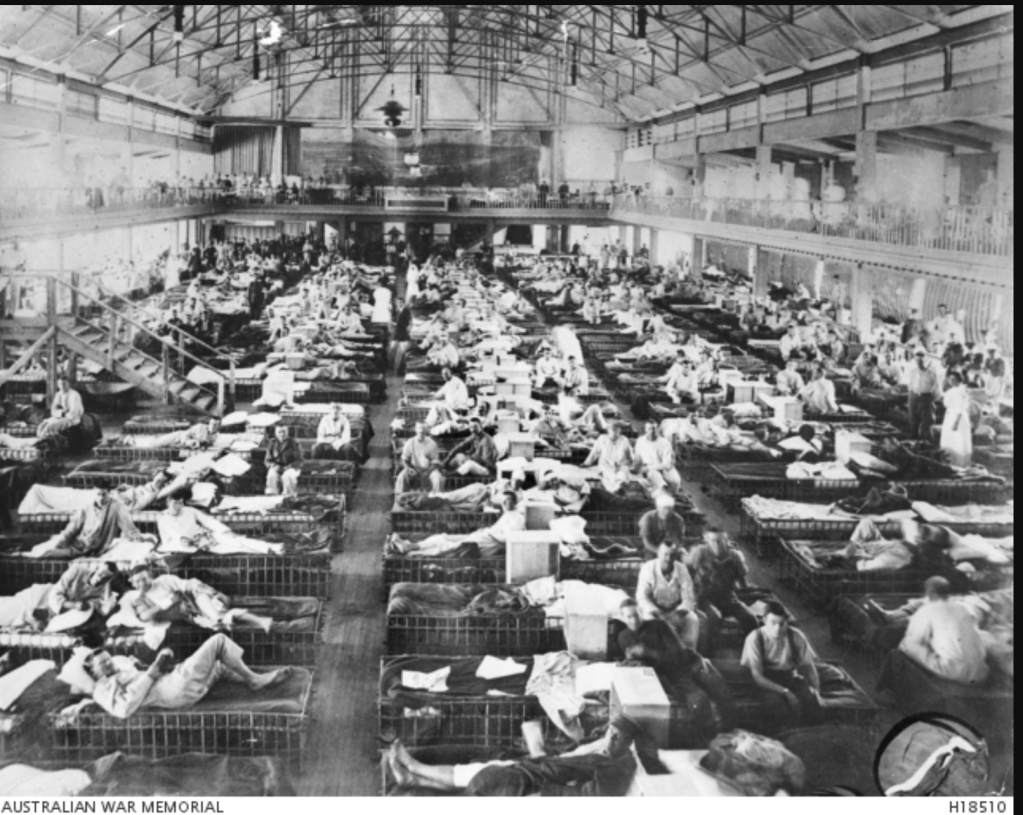
Heliopolis, Egypt. C. 1915. The interior of the Auxiliary Hospital which formed part of No. 1 Australian General Hospital, located in the former Heliopolis Palace Hotel. The inmates were from Gallipoli.4

In mid-January 1916 he was discharged to Base Details. He was then attached to a permanent Guard over the ESR Workshop, Cairo, until 12 May 1916. The ESR Workshop could refer to workshop facilities associated with the Egyptian State Railways (ESR). The workshop functioned as a key logistical and engineering hub for the Australian Imperial Force and wider British Empire forces in the Sinai and Palestine Campaigns.

Felix’s next move was to No 1 Auxiliary Hospital, Heliopolis, for guard duties. In August 1916 he was sent to the 3rd Australian General Hospital in Abbassia still doing guard duties. During these months he was admitted to hospital three times as a Malaria Fever patient.

In December 1916 he made an application for transport duty to Australia and it was accepted. He embarked for Australia on the Euripides on 22 January 1917, arriving in Adelaide on 24 February 1917, when he received a fortnight’s furlough. No doubt his parents were in Adelaide to see their son.

Felix was still suffering from Malaria, for he was then admitted to No 7 Australian General Hospital Keswick, where he remained for 9 weeks undergoing treatment. This hospital later became known as the Repatriation General Hospital.

Several months after his return to Adelaide, Felix applied to be discharged from military service.

Enclosed you will find full particulars of me since I enlisted, and I hope you will use your influence to obtain for me my discharge. Your obedient servant, (sgd) F. P. Dempsey, Machine Gunner and Tunneller. Mitcham Camp, June 10th 1917.

At the conclusion of his submission for discharge from military service, Felix said

Then went to Torrens Park for one week; then sent into Camp on full duty and now I am expecting to go away in 3 week’s time. My parents live at Pt. Pirie, I am an only child and owing to advanced years and failing health of my parents, my Father is now looking forward to the support of his only child, who has been and done his share in this War.” (sgd.) F P Dempsey5

There is a hand-written note at the bottom of the page, This man to be discharged and action reported to Melbourne. His date of discharge was 2 August 1917. He had served 2 years and 182 days.

My final blog post will be about Felix’ life after his discharge from military service

  1. Hororata is a small village on the northwestern edge of the Canterbury Plains, about 50 km west of Christchurch. The Maori translation is “drooping rata”. There are many beautiful rata trees growing in the locality. HMAT A20 Hororata https://birtwistlewiki.com.au/wiki/HMAT_A20 ↩︎
  2. Military engineers became known as ‘sappers’ in the 17th century, when attackers dug trenches to approach and then undermine the walls of a besieged fort. The French word sappe means spadework or trench. Those specialist soldiers who dug those trenches became known as ‘sappers’. Sapper is now used as a general term to refer to all military engineers. However, unusually if not uniquely, within the Corps of Royal Australian Engineers, “Sapper” also denotes a rank equivalent to ‘Private’ for soldiers. Royal Australian Engineers Foundation, https://www.raefoundation.org.au/sappers/ ↩︎
  3. Australian War Memorial Collection. https://www.awm.gov.au/collection/C273563 ↩︎
  4. Australian War Memorial Collection. https://www.awm.gov.au/collection/C256259 ↩︎
  5. Record Search. National Archives of Australia. https://recordsearch.naa.gov.au/SearchNRetrieve/Interface/SearchScreens/NameSearch.aspx ↩︎
Remembering Felix Patrick Dempsey

Part 1

Felix Patrick Dempsey was born on 5 June 1894 in Port Pirie, South Australia. His parents were Michael Andrew Dempsey and Rose Ann McGinnity. He died in Brisbane on 9 November 1942, aged 48. Those are the bare facts of his life.

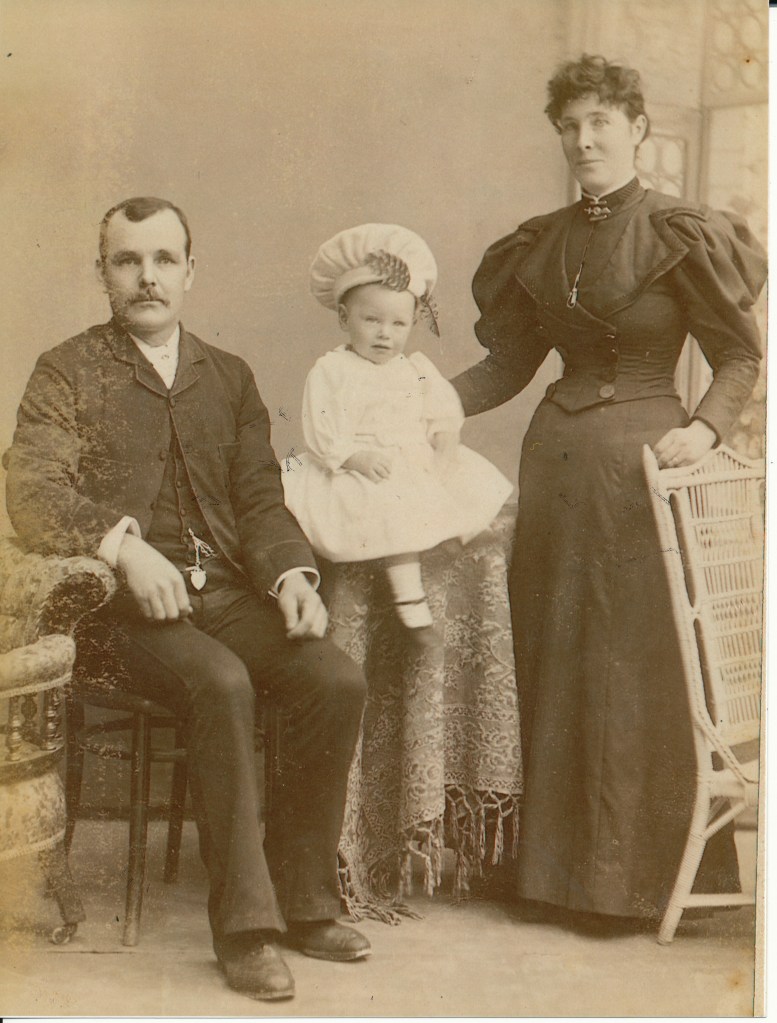
Felix Patrick Dempsey with his parents, Michael Andrew Dempsey and Rose Ann McGinnity. 1894 or 1895. He was their only child.
Felix Patrick Dempsey with his parents Michael and Rose. He was their only child. 1895. Personal photo collection.

He was not a close relative of mine. I have more than 150 Dempsey names in my family history database. So what brought me to examine the life of this distant cousin and decide that his story was worth telling and remembering?


The Australian Remembrance Army, founded in Brisbane in 2020, is a group of volunteers dedicated to ensuring that the service and contribution of men and women who left Australia to serve overseas and who did return, should not be forgotten.1 Katrina Trevethan is one of the Co-Founders of the Australian Remembrance Army. For five years, she and her fellow researcher Cate Walker have been voluntarily researching war veterans buried in unmarked graves at Brisbane’s heritage-listed cemeteries. To date, they have identified over 800 Great War (WWI) veterans in unmarked graves at Lutwyche Cemetery.

A couple of months ago I received a surprise message on the Ancestry website from Katrina. She had found a returned serviceman named Felix Patrick Dempsey on my Family Tree and wondered how I was related to him. In part her message said:

We’re now focusing on Toowong Cemetery, where over 600 WWI veterans lie in unmarked graves. I have submitted 200+ applications to the Repatriation Commission to be assessed to determine if the veteran is eligible for official commemoration, including one for FELIX. His application was approved, and his grave will soon be marked by the Office of Australian War Graves (OAWG), which will be cared for by them in perpetuity.

As part of the process, OAWG requests contact with a descendant before proceeding. If you are related to FELIX PATRICK DEMPSEY, I would greatly appreciate your assistance. There is NO COST involved—just your consent and contact details (email is fine) to share with OAWG so they can extend a formal offer of official commemoration to the descendant.

I confirmed that Felix Patrick Dempsey was a distant cousin of mine. His grandfather, Felix Dempsey and my 2X great grandfather John Dempsey were brothers. The Dempsey family were from County Cavan, Ireland and emigrated to South Australia in several family groups between 1849 and 1854. I said that I was grateful that my relative Felix Patrick Dempsey would be commemorated in the Toowong Cemetery.

I have since received an offer of official commemoration of Felix Patrick Dempsey from the Office of Australian War Graves, Department of Veterans’ Affairs. I felt privileged to be asked to complete and return the application form which will ensure that his grave will be formally marked at his actual burial location in Brisbane’s Toowong Cemetery: Section 10, Row 69, Grave No 25.

Family background of Felix Patrick Dempsey

Felix Patrick Dempsey’s grandfather, Felix Dempsey, was born in Cootehill, County Cavan, Ireland in 1825. He arrived in South Australia on the Joseph Rowan on 16 June 1854. He was accompanied by his parents, Thomas and Mary Dempsey, sisters Catherine and Mary and brother Thomas. Their arrival was the last of a pattern of chain migration of the Dempsey family to South Australia.

In 1858 John Dempsey (my 2X great-grandfather) and his younger brother Felix bought Section No. 36 in the Hundred of Upper Wakefield in their joint names. The section was of 224 acres and divided in half along east-west lines, with John and Felix each having 112 acres. It was located between Mintaro and Auburn. This was where they began their lives as farmers in South Australia.

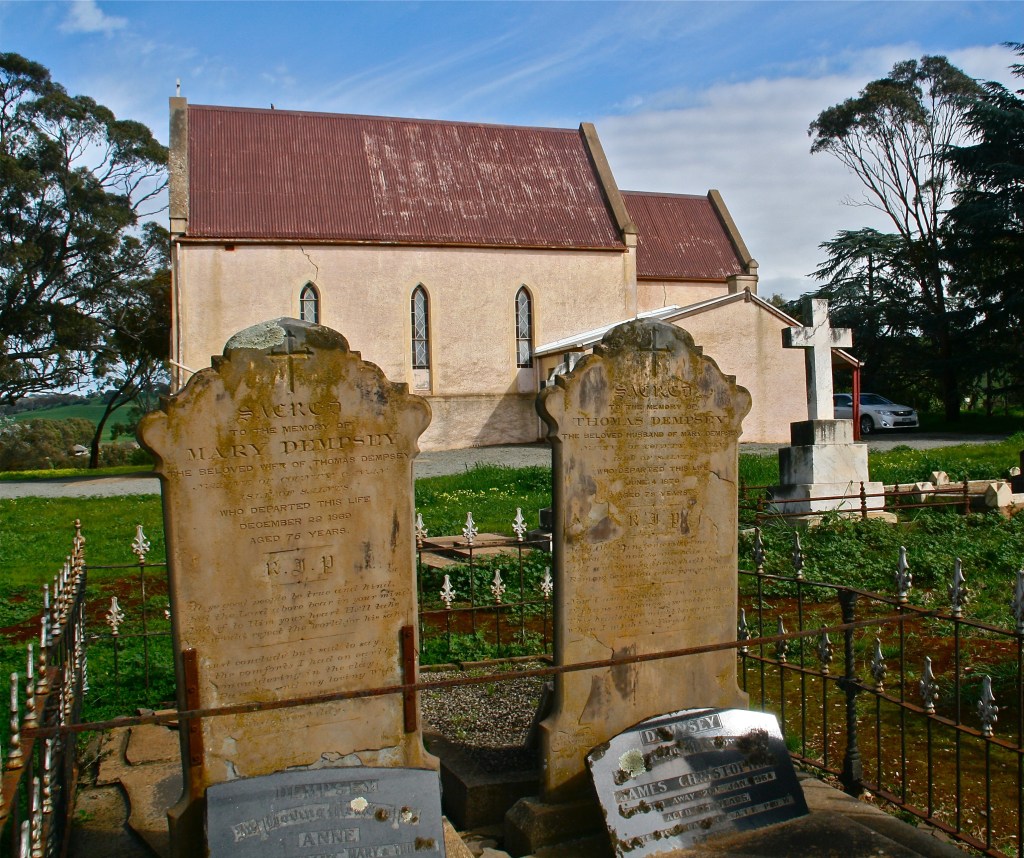
Felix married Elizabeth Tully on 30 July 1863 at the Church of the Immaculate Conception in Mintaro. This Church is significant in the Dempsey family history. The Dempseys were struggling early settlers battling to carve out a life for themselves in the new colony. Along with other pioneering Catholic families from the district around Mintaro they contributed to the cost of building this church which opened in 1856. It was served by the Jesuit priests from Sevenhill Parish. My 3X great grandparents, Thomas Dempsey (1792–1870) and Mary Tully (1794–1869) lie buried in the cemetery next to the church.2

The tombstones of my 3X great-grandparents, Thomas Dempsey 1792–1870 and Mary Tully 1794–1869 in the cemetery of the Church of the Immaculate Conception, Mintaro. They were the first generation of the Dempsey family to emigrate to South Australia.

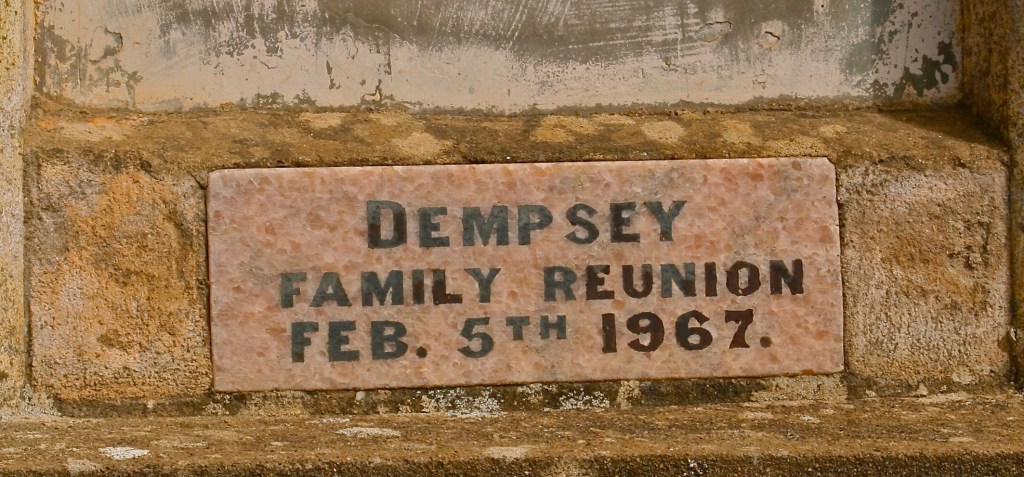
There is a plaque on the wall celebrating a Dempsey family reunion which took place in Mintaro in 1967.

Felix and Elizabeth had four sons and three daughters during their 11-year marriage. The youngest son died aged one month in 1873. Elizabeth died on 16 June 1874 leaving Felix with six children aged between ten and two years old. She was buried in the graveyard of the Mintaro church. When I visited this church and graveyard some years ago, I was touched by the inscription on her tombstone, even though at the time I did not know her story. I could sense Felix’ grief at the loss of his young wife.

To the memory of

Elizabeth Dempsey

the beloved wife of Felix Dempsey

Native of County Cavan, Isle of Saints

who departed this life

June 16, 1874 aged 38 years

Come all you people who pass by,

And on this Headstone cast an eye,

Repent in time, make no delay

For no one knows their dying day.

All you who pass will you kindly pray

For one whom you will meet on Judgement Day.3

Snatched from this dreary life,

In the twinkling of an eye,

My own dear loving wife

Will you look on me from high.

In one long night, she slept the sleep of death.

How lowly thou art laid,

My own dear loving wife

But I will meet again with thee

In that bright land above.

Felix never re-married. Somehow, he brought up his young family on his own, with the help of nearby relatives. The eldest child Mary probably devoted her youth to looking after her young siblings. She married at the age of 43 and never had a family of her own. Felix Patrick Dempsey’s father, Michael Andrew Dempsey (1868-1925) was four years old when his mother died.

Felix was a hardworking and enterprising farmer who purchased more sections in the Hundred of Upper Wakefield. These sections raised his holding to 511 acres. All these sections were contiguous and were separated from Section 36 only by a road. In 1874 Felix bought sections 342 and 343 containing 117 acres adjoining Mintaro township. He bought this property with the intention of living ther while still retaining oversight of his other properties so that his young children could be within easy reach of the Mintaro school run by the Sisters of Saint Joseph. In April 1884 my 2X great-grandfather John Dempsey disposed of his half interest in Section 36 to Felix for £5 10/- per acre. Felix was left as the sole owner of the original Dempsey homestead section.

When age began to take its toll, Felix retired from farming. His great-nephew Joe Dempsey wrote the following about Felix in 1933:

He removed to Port Pirie where his second son, Michael, had settled and remained under the shelter of his roof until death claimed him, a sturdy and hardened example of pioneering fortitude, a venerable as well as venerated stalwart of the Faith, in 1912 at the advanced age of 87 years. His remains were conveyed to Mintaro and laid to rest amid relatives in the cemetery there.3


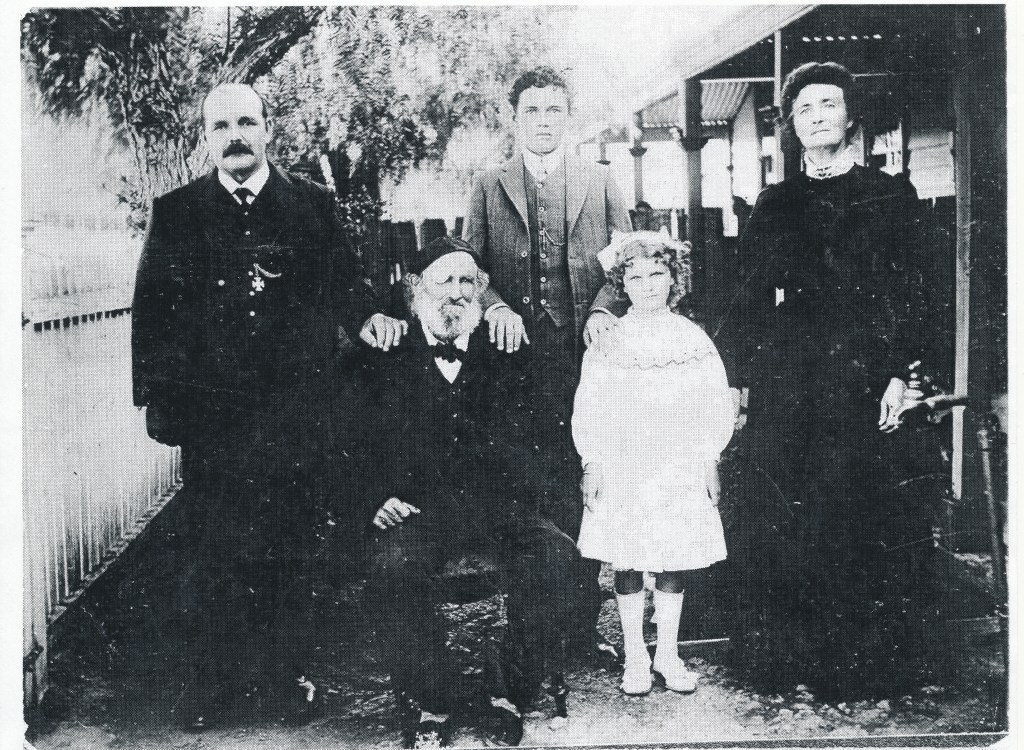
Standing: Michael Andrew Dempsey, Felix Patrick Dempsey, Rose Ann McGinnity. Seated in front, Felix Dempsey, the father of Michael Andrew Dempsey and grandfather of Felix Patrick Dempsey. The young girl is Elizabeth Charlotte Allen. Photograph taken in Port Pirie not long before the death of Felix Dempsey in 1912.

My next post will be about the service of Felix Patrick Dempsey in World War I.

  1. https://www.australianremembrancearmy.com/ ↩︎
  2. The Dempsey family is one of the families featured in this book. Lally, Gerald, A landmark of faith: Church of the Immaculate Conception Mintaro and its parishioners 1856-2006, Gerald A. Lally, Clare, S.Aust, 2006 ↩︎
  3. This is a traditional and powerful memento mori (a reminder of mortality) commonly found on 18th and 19th-century tombstones in English-speaking countries. ↩︎
  4. Joseph Dempsey, A Tribute to our Pioneer Ancestors: The Dempsey Family in South Australia, self-published, November 1933. Family collection. This book is also deposited in the National Library of Ireland and the GenealogySA Library. ↩︎

Anne Hayes, the daughter who was left behind

The Hayes family arrived in South Australia on 23 August 1849 on the ship Eliza. The passenger list recorded that they were from County Galway: Thomas and Honora Hayes, aged thirty-eight and thirty-four, and three children, Mary aged ten, Patrick aged nine and Thomas who was an infant. The child Patrick was my great-grandfather.

Given the age gap between Patrick and Thomas, I assumed that there may have been more children who perhaps did not survive the Famine. Further along in my research I discovered that there were three more children: a son John born in 1842 who probably died in infancy, another son named Michael, born circa 1843 and a daughter Anne, born in 1847. Michael, aged about six and Anne aged two were left behind, presumably in the care of relatives, when their parents emigrated. This practice was not uncommon and was the result of the restrictions the Emigration Commissioners placed on the number of children who could emigrate with their parents. The Hayes family’s application could have been rejected outright  if they had too many children under the age of ten. A fare of £2 was charged for the first two children, but £5 for any additional child. Families found a way to get around these regulations to minimise the fare they had to pay.[1] Sometimes a child from a large family was ‘given’ to a small family to make the voyage. Thomas and Honora’s circumstances must have been desperate for them to make this difficult decision. Michael and Anne later joined them in South Australia.

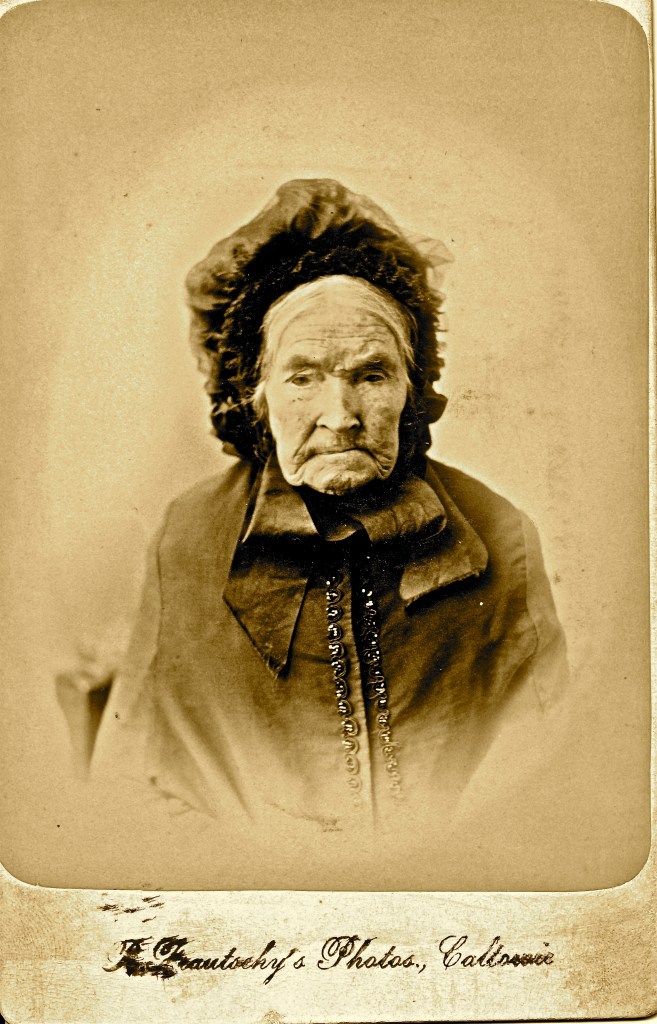
Honora Hennessy 1815–1899. This photograph taken in Caltowie towards the end of her life reveals a lifetime of hardship and sorrows. Of Honora’s 10 children, only Patrick and Anne left any descendants. Three of her children died in infancy.

Anne’s story

When and how Anne Hayes arrived in South Australia remains a mystery. There is a record for a passenger named Anne E Hayes, aged nineteen, servant from Limerick, who arrived on the Ocean Chief on 7 April 1864. She was a Remittance Emigrant. ‘Our’ Anne Hayes would have been aged seventeen. We cannot be certain that this is the correct record. Anne may have arrived with a family under another name or arrived in one of the other colonies and then travelled to South Australia.

On 18 March 1865 Anne Hayes married George Holmes at Saint John’s Catholic Church, Kapunda.[2] The marriage certificate has the following information: Anne was aged eighteen, a servant, from Kapunda, her father was Thomas Hayes and the witnesses were Patrick Hayes, farmer of the River Light and Anne Bolton, servant of the River Light. The celebrant was Father Thomas Dowling. Father Dowling filled out a form attached to the marriage certificate which affirms that Anne was a Catholic but George was not. Presumably George remained an Anglican and did not convert to Catholicism when he married Anne.

George Holmes, an able seaman from Dover, age twenty-eight, arrived on the Otago into Sydney on 9 January 1864.[3] George had been a mariner from the age of sixteen and may have made several voyages from England to Australia. He had an older brother John who was living in NSW at the time. Anne was not a passenger on Otago. It would be interesting to know where this young Irish girl and the seaman from Dover met, and when he gave up his maritime career and came to South Australia.

George Holmes & Anne Hayes. Date of photograph unknown. Author collection

George Holmes was christened at the Anglican church of St Mary the Virgin, Dover on 24 February 1835. There has been a church on this site since Saxon times. George had seven siblings who were all born in Dover. His mother Elizabeth was a pilot’s widow, his father having drowned while piloting the barque Harriot on a voyage from Quebec City to London on 25 December 1836. The ship was driven ashore and wrecked at Shakespeare Cliff, Dover, Kent with the loss of five of the twenty-four people on board.[4] Shakespeare Cliff derives its name from a reference in Shakespeare’s play King Lear. It lies along a stretch of the White Cliffs between Folkestone and Dover.

As I studied the Land Grant which my great grandfather Thomas Hayes had received in December 1858, I found that on 6 March 1865 he transferred Sections 242 and 243 in the Hundred of Belvedire to George Holmes of Kapunda, farmer. ‘Consideration money paid £588.’ The Land Grant was cancelled and a new Certificate of Title issued to George Holmes. This was an exciting discovery as it confirmed that Anne Hayes was indeed the daughter of Thomas and Honora, and that they were prepared to give up this good farming land for their daughter on the occasion of her marriage.

Land grant for Sections 242 and 243 in the Hundred of Belvidere to Thomas Hayes. Register Book Volume 3, Folio 36

George and Anne stayed on the land near Kapunda for only three years. On 2 April 1868 George transferred the property to Elizabeth Isabel Goodchild and the Holmes family moved to Auburn, a pretty village about 50 km from Kapunda in the direction of the Clare Valley. The name of Auburn is thought to come from a poem by Oliver Goldsmith, ‘Sweet Auburn, loveliest village on the plain.’ It is the birthplace of the poet, CJ Dennis (born 1876). He would have been a contemporary of some of the children of Anne and George.

Between the years 1865 and 1886 Anne Hayes had fifteen children, ten sons and five daughters. Two of the daughters were twins. Four of her sons died young. Her first child George died aged two years, James aged six months, Edward Alexander aged sixteen years and Henry died aged seven years. A fifth son, William Joseph died in 1896 aged twenty-two.

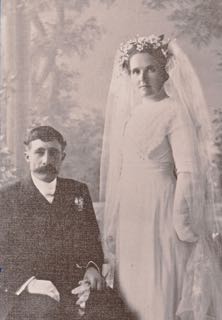
The wedding of Ann Katherine Holmes (1882-1966) and George Alfred Lapidge, St Patrick’s Church Undalya on 20 June 1912. Photograph courtesy of their daughter Margaret Morrison.

Anne drowned in the River Wakefield at Auburn at the age of 52 on 11 February 1900. Her youngest child Agnes was eleven years old. The inquest reads: ‘At Auburn, the 11th instant, on the body of Ann Holmes, who was found dead in the River Wakefield on the same date. Verdict – That the deceased was found drowned, and that there is no evidence to show how the deceased came into the water.’ Anne was buried in the cemetery at Undalya near Auburn.

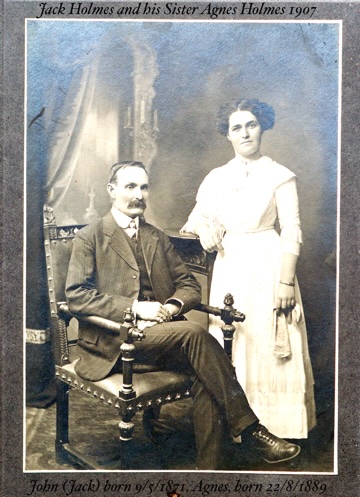
Jack Holmes (1871-1953) and his sister Agnes Holmes 1889–1980). Date of photograph 1907. Agnes was the youngest child in the family. She never married and looked after her father in his old age.


[1] Richard E. Reid, Farewell My Children: Irish Assisted Emigration to Australia 1848-1870, Anchor Books Australia, 2011, pp 19-21

[2] South Australian Marriages Registrations 1842 to 1916, Book/page 61/313. From the age on her marriage certificate, we can calculate Anne’s year of birth as circa 1847.

[3]An able seaman (AB) is a naval rating of the deck department of a merchant ship with more than two years’ experience at sea and considered ‘well acquainted with his duty’.

http://marinersandships.com.au/1864/01/026ota.htm

[4] https://en.wikipedia.org/wiki/List_of_shipwrecks_in_December_1836#25_December George’s mother died on 20 October 1887. She left a substantial will of £6,253.