Felix Patrick Dempsey’s war record
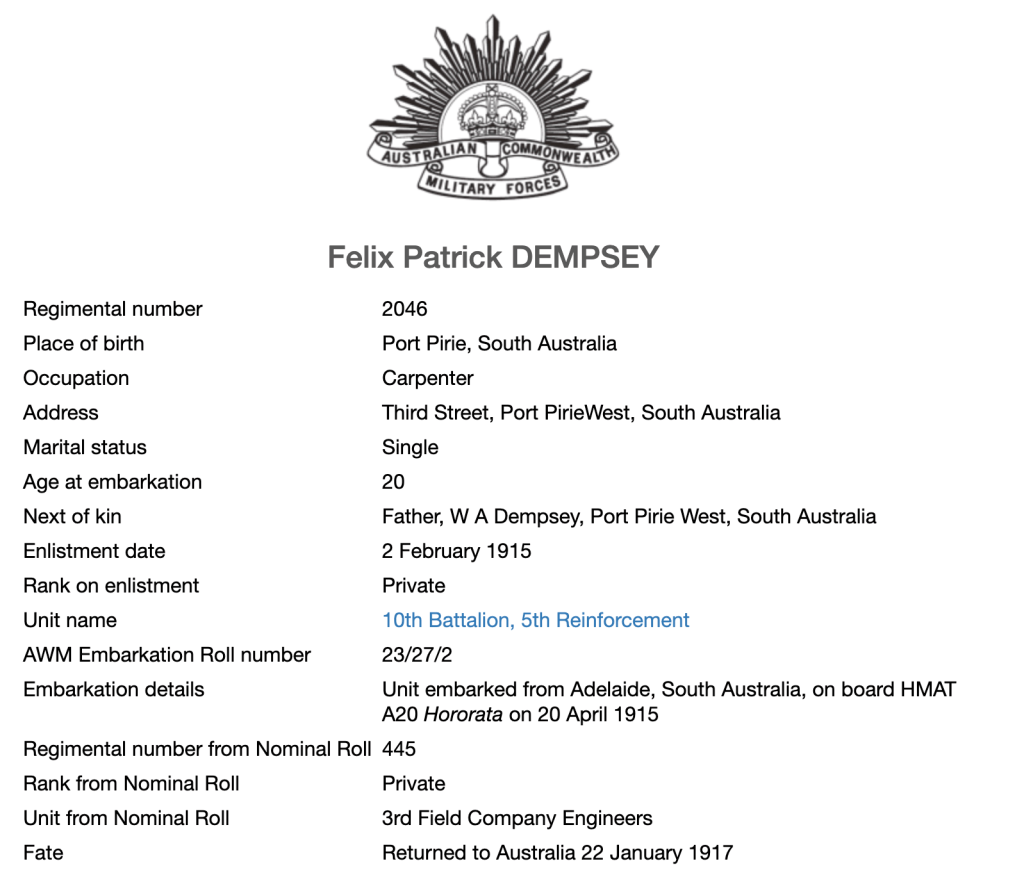
According to Australian War Memorial records, Felix Patrick Dempsey enlisted at age 20 on 2 February 1915. His occupation was listed as carpenter. His Certificate of Medical Examination describes him thus: height 5 feet 8½ inches, weight 134 lbs., healthy complexion, grey eyes, dark brown hair. He was a young man from a small country town, one of many who set off to fight in the Great War, with no idea of the horrors which lay ahead of them. He was a member of the 10th Battalion which was established in South Australia and served at Gallipoli, in Egypt and on the Western Front. The 5th Reinforcement, of which Felix was a member, joined the 10th Battalion on the Gallipoli Peninsula soon after the initial landing.
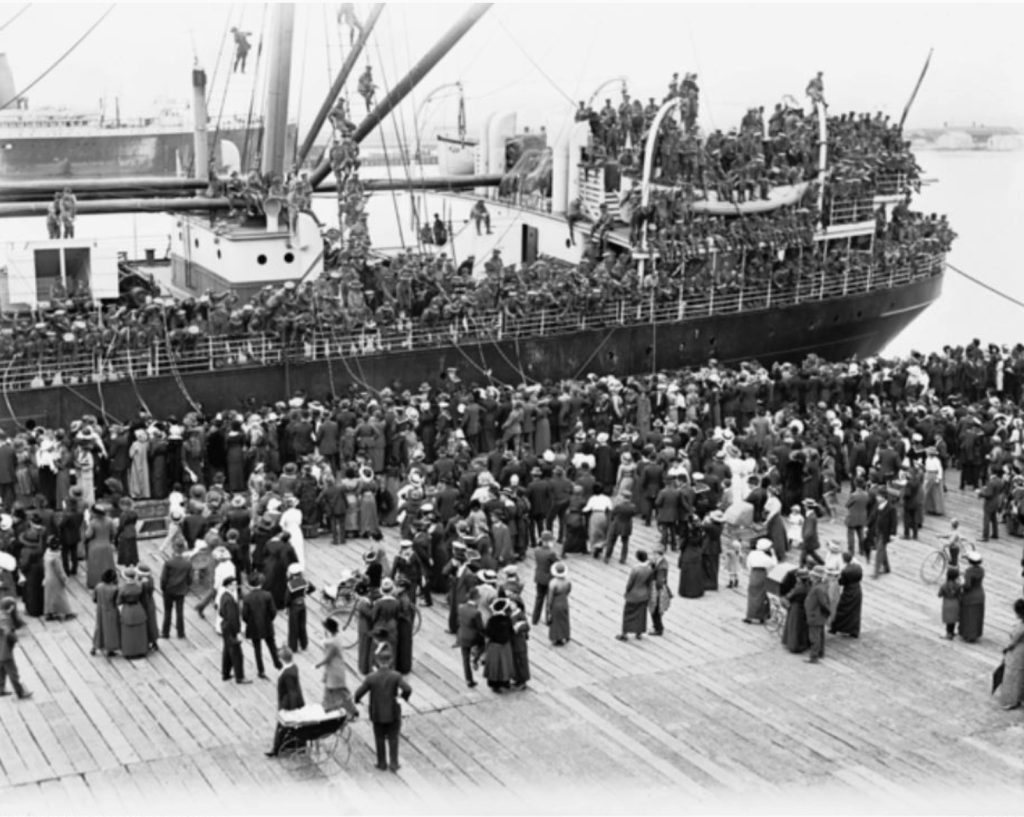
After enlisting Felix attended a Signalling School at Broadmeadows before embarking on the troopship Hororata from Adelaide on 20 April 1915. The Hororata was owned by the New Zealand Shipping Company and leased by the Commonwealth Government until 1917.1
I was fortunate to find the details of Felix’ service record on the National Archives of Australia website, with 21 pages of original documents. This was an invaluable resource.
The soldiers disembarked the Hororata at Port Said. After a month’s training in Egypt, the troops then embarked for Gallipoli. Felix fought on Gallipoli for 10 weeks. While there he was transferred to the 3rd Field Company Engineers with the rank of Sapper.2 Sappers specialized in combat engineering tasks such as building bridges, demolition work, and laying and clearing minefields. Sappers were trained to both fight as infantry and perform specialized engineering tasks.
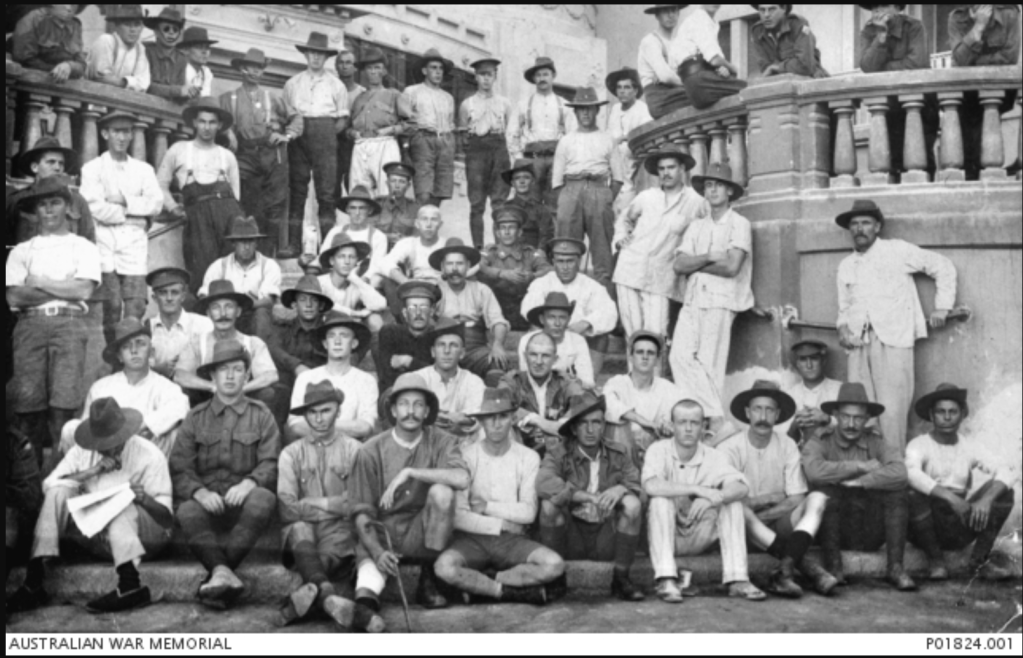
After 10 weeks service on the battlefront at Gallipoli, Felix was suffering from shell shock and dysentery. He was sent to No 4 Auxiliary Hospital, Abbassia, a suburb of Cairo. When he was considered sufficiently recovered he was sent to a Convalescent hospital for sick and wounded soldiers at Helouan, a suburb of southern Cairo. Felix was a patient at this Convalescent Hospital at the approximate time this photograph was taken.3
He later went back to light duty camp at Zeitoun, another Cairo suburb. He volunteered to go back to Gallipoli again in early November 1915, but only reached Lemnos Island in the northern Aegean Sea when he had an attack of Malaria. Malaria is a serious illness which can lead to seizures, organ failure and death if not treated swiftly. Felix was sent to the 16th Stationary Hospital, a medical unit stationed at East Mudros on the island of Lemnos during the Gallipoli campaign where he remained until 23 December. This medical unit served as a critical care point for wounded and sick Australian and Allied soldiers during 1915 until it was transferred to Egypt in January 1916.
From the hospital on Lemnos, Felix was sent to the No. 1 Australian Auxiliary Hospital which had been established in a park adjacent to the 1st Australian General Hospital at Heliopolis, on the outskirts of Cairo. This photo gives us some idea of the conditions in this hospital.
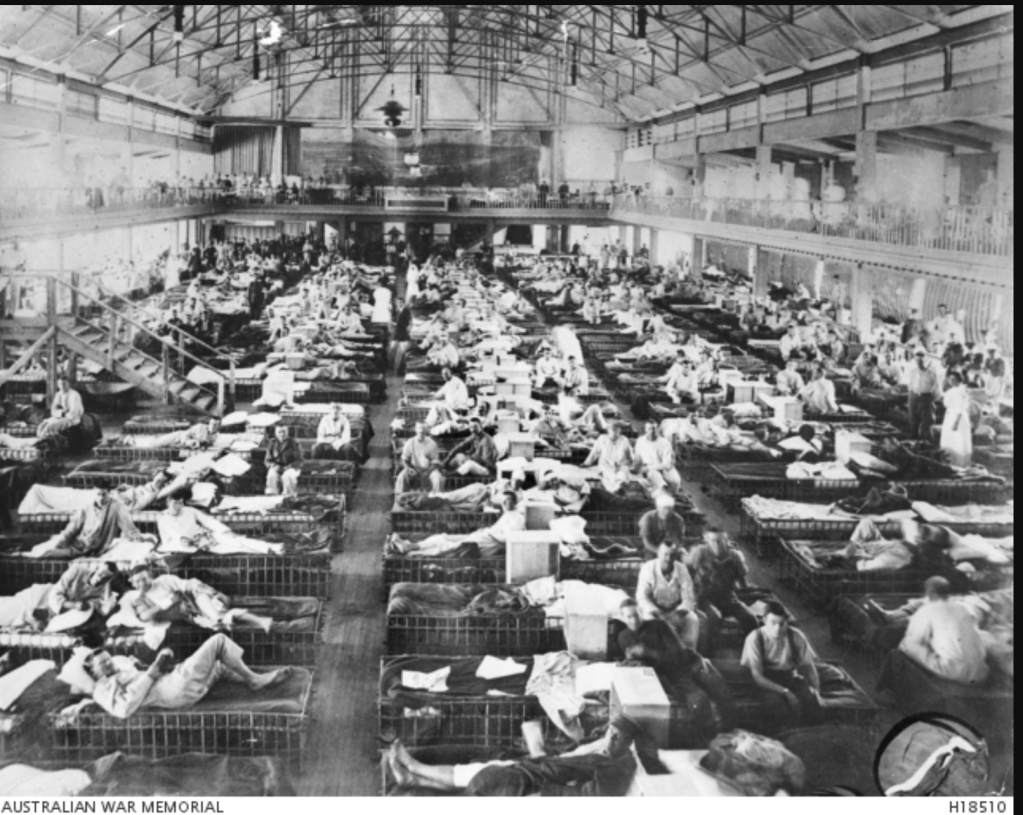
In mid-January 1916 he was discharged to Base Details. He was then attached to a permanent Guard over the ESR Workshop, Cairo, until 12 May 1916. The ESR Workshop could refer to workshop facilities associated with the Egyptian State Railways (ESR). The workshop functioned as a key logistical and engineering hub for the Australian Imperial Force and wider British Empire forces in the Sinai and Palestine Campaigns.
Felix’s next move was to No 1 Auxiliary Hospital, Heliopolis, for guard duties. In August 1916 he was sent to the 3rd Australian General Hospital in Abbassia still doing guard duties. During these months he was admitted to hospital three times as a Malaria Fever patient.
In December 1916 he made an application for transport duty to Australia and it was accepted. He embarked for Australia on the Euripides on 22 January 1917, arriving in Adelaide on 24 February 1917, when he received a fortnight’s furlough. No doubt his parents were in Adelaide to see their son.
Felix was still suffering from Malaria, for he was then admitted to No 7 Australian General Hospital Keswick, where he remained for 9 weeks undergoing treatment. This hospital later became known as the Repatriation General Hospital.
Several months after his return to Adelaide, Felix applied to be discharged from military service.
Enclosed you will find full particulars of me since I enlisted, and I hope you will use your influence to obtain for me my discharge. Your obedient servant, (sgd) F. P. Dempsey, Machine Gunner and Tunneller. Mitcham Camp, June 10th 1917.
At the conclusion of his submission for discharge from military service, Felix said
Then went to Torrens Park for one week; then sent into Camp on full duty and now I am expecting to go away in 3 week’s time. My parents live at Pt. Pirie, I am an only child and owing to advanced years and failing health of my parents, my Father is now looking forward to the support of his only child, who has been and done his share in this War.” (sgd.) F P Dempsey5
There is a hand-written note at the bottom of the page, This man to be discharged and action reported to Melbourne. His date of discharge was 2 August 1917. He had served 2 years and 182 days.
My final blog post will be about Felix’ life after his discharge from military service
- Hororata is a small village on the northwestern edge of the Canterbury Plains, about 50 km west of Christchurch. The Maori translation is “drooping rata”. There are many beautiful rata trees growing in the locality. HMAT A20 Hororata https://birtwistlewiki.com.au/wiki/HMAT_A20 ↩︎
- Military engineers became known as ‘sappers’ in the 17th century, when attackers dug trenches to approach and then undermine the walls of a besieged fort. The French word sappe means spadework or trench. Those specialist soldiers who dug those trenches became known as ‘sappers’. Sapper is now used as a general term to refer to all military engineers. However, unusually if not uniquely, within the Corps of Royal Australian Engineers, “Sapper” also denotes a rank equivalent to ‘Private’ for soldiers. Royal Australian Engineers Foundation, https://www.raefoundation.org.au/sappers/ ↩︎
- Australian War Memorial Collection. https://www.awm.gov.au/collection/C273563 ↩︎
- Australian War Memorial Collection. https://www.awm.gov.au/collection/C256259 ↩︎
- Record Search. National Archives of Australia. https://recordsearch.naa.gov.au/SearchNRetrieve/Interface/SearchScreens/NameSearch.aspx ↩︎
 My Irish Ancestors in South Australia