An abandoned church evokes the spirit of my Dempsey ancestors

This article which I wrote recently has just been published in the May 2023 edition of The South Australian Genealogist.

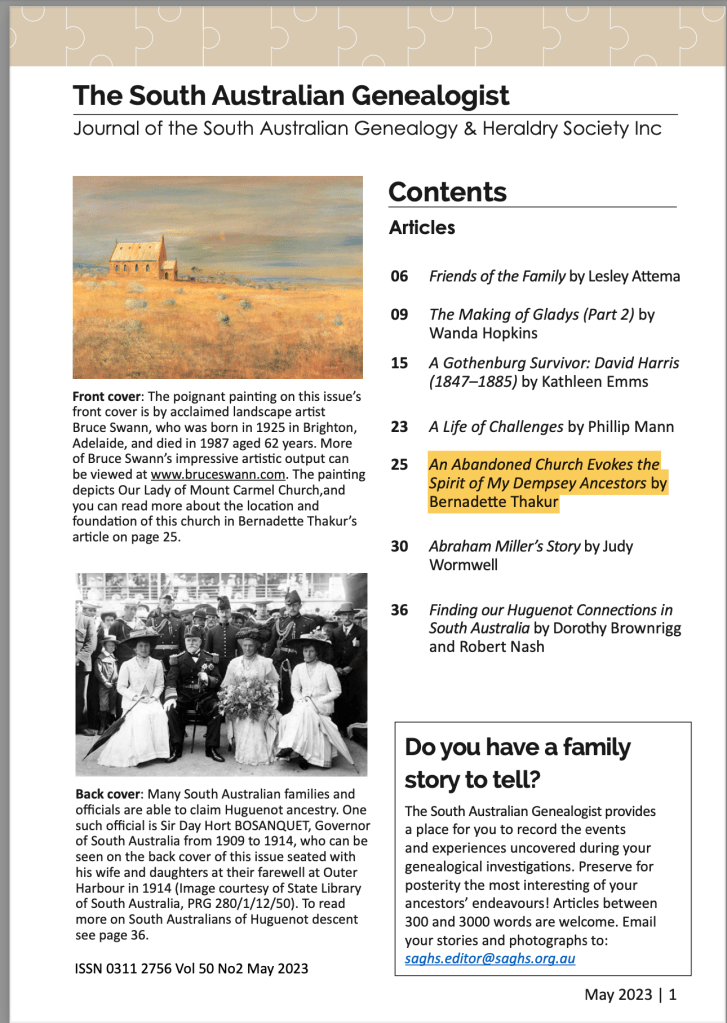
This is the article.

Our Lady of Mount Carmel Church, Dawson’ painted by Bruce Swan. Image courtesy of Steve Swan.

There is an evocative painting by South Australian landscape artist Bruce Swann, Our Lady of Mount Carmel, Dawson of a once beautiful small church standing alone in a dry landscape on a hot summer’s day. It is a forlorn symbol of the lost dreams of hard-working pioneers.

This church has a significant place in the history of my maternal ancestors, the Dempsey family. My great grandparents helped to build the church. Until I began researching my family history, I had never heard of Dawson or Our Lady of Mount Carmel Church. “Our Lady of Mount Carmel” is the name given to Mary in her role as patroness of the Carmelite religious order. The Carmelite order was founded on Mount Carmel in the 12th century. Mount Carmel is a coastal mountain range in northern Israel. Carmelite tradition has it that a community of Jewish hermits had lived at the site since the time of the prophet Elijah (900 BCE). Elijah is revered as the spiritual Father of the Order. Shortly after the Order was created a Carmelite monastery was founded at the site dedicated to the Blessed Virgin Mary.

Another Bruce Swan painting of Our Lady of Mount Carmel Church in Dawson, from a slightly different angle, was commissioned by the people of South Australia and presented to Pope John Paul II on his 1986 visit to Adelaide. It is now part of the Vatican collection. The Church is listed on South Australia’s Heritage Register with the following citation:

Dawson's Catholic Church, Our Lady of Mount Carmel, built in 1886 is of significance because it evocatively illustrates the pattern of settlement associated with the expansion of the agricultural frontier that occurred as a result of land reform from the mid 1870s. With extreme optimism, small farming communities were established far north of Goyder's Line of Rainfall and hamlets developed. In Dawson, this fine church was built, anticipating a thriving community. The architect for the building, Father John Norton is of significance as a competent architect turned priest and was responsible for several buildings in the region. Of course, the town of Dawson and its envisaged wheat farming community did not occur, beaten by years of drought in country best described as marginal. Dawson's Church evokes all of this history and stands in this barren landscape as a monument to the failure of the later Strangways resumptions.

The 1880s saw the construction of Methodist and Anglican churches as well as the Catholic church. The Dawson Hotel was built in 1883. A public school opened in 1885 after several years of agitation by local residents. Local government came to the area in 1888 with the District Council of Coglin which met alternately between Dawson and Lancelot. In its heyday, Dawson had multiple stores, an Institute, an agricultural bureau, and a blacksmith.

My great grandparents were among the unfortunate early settlers who tried farming outside Goyder’s Line of Rainfall. George Goyder was South Australia’s first Surveyor General who determined that land beyond a certain line was not suitable for agriculture as it lacked reliable rainfall. The government of the day ignored his warnings, and knowingly sold land to unsuspecting settlers. The countryside around Dawson has returned to its native vegetation, mainly salt bush and mallee scrub. Farmers run a few sheep. There is little trace left of the community who once lived there.

My grandfather, Patrick Joseph Dempsey was born on the family farm near Dawson on 17 July 1887, the second child of my great grandparents Andrew Felix Dempsey and Mary Ann Naughton. Their first child, a daughter named Mary Bridget, was born on 22 March 1886. She lived for only 11 days and was buried in the Dawson cemetery. In the photographs I have seen of my great grandmother as an old lady, she looks rather stern. I tried to imagine her feelings as a young woman, coping with the grief of losing her first child soon after birth. Altogether Mary Ann had eight children born near Dawson between 1886 and 1901.

Mary Ann Dempsey (nee Naughton) with her granddaughters Patricia and Mary Dempsey. My mother Mary Dempsey is the baby on her lap. 1915.

A few years ago I went on an ancestral journey of discovery in South Australia, visiting the places where my ancestors had once lived. Dawson was the last stop. We turned off the Barrier Highway north of Peterborough on to a rough dirt road. It did not look promising. There had been heavy rain that winter and we were nervous about getting bogged, an experience we had already encountered near Wirrabara. We wondered if we should continue or abandon our quest to find Dawson. As we passed the small cemetery, we could see it was not far to go so we decided to risk it. The remains of a solid hotel stand on the corner of the main intersection of what was once Dawson.

Dawson, with the ruins of the hotel on the left. 18 September 2016

What happened next was one of those serendipitous moments when I felt that the spirits of my ancestors were watching over me as I researched my family history. In that deserted landscape, a farmer appeared driving his ute with his working dog beside him. He stopped to chat and was naturally curious about what we were doing in Dawson. I told him about my interest in Our Lady of Mount Carmel Church and to my amazement he told me that I would find the keys hanging on a hook in the small community hall nearby and I could return them there when I had finished looking inside the church.
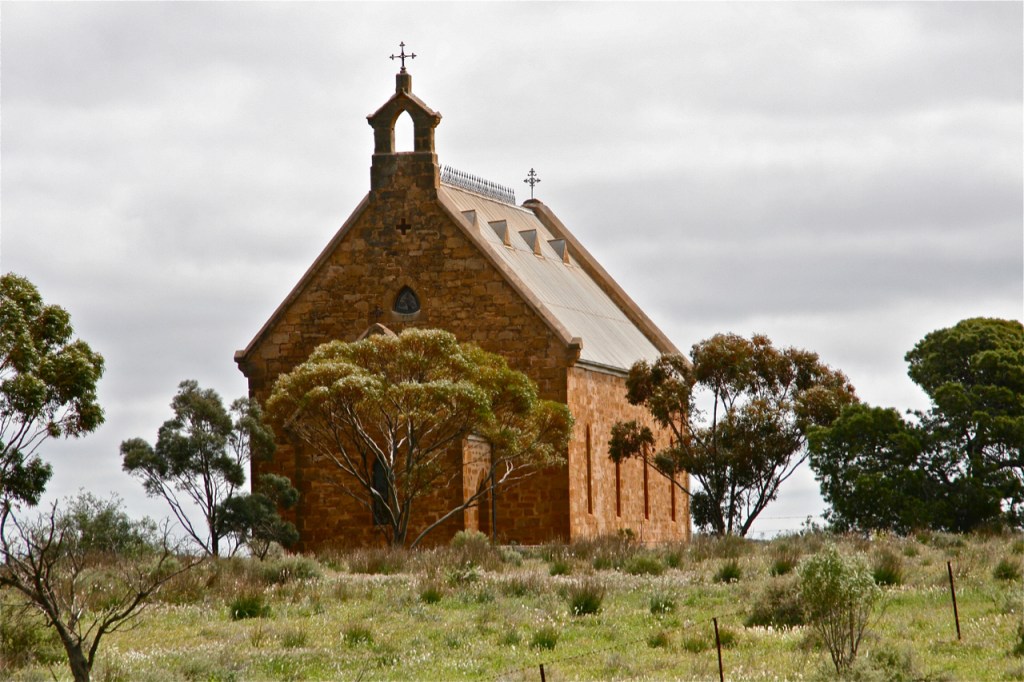
Our Lady of Mount Carmel Church, Dawson. 18 September 2016

When I entered the church, I was moved to see one of the stained glass windows had been dedicated by my great grandparents “Andrew and Mary Dempsey”. I have visited many of the great cathedrals of Europe, but they did not move me as much as this small church in the bush. I felt a sense of grief and loss for my ancestors who had built this church and after a few years had to leave it behind when they were forced to abandon farming in this inhospitable environment.
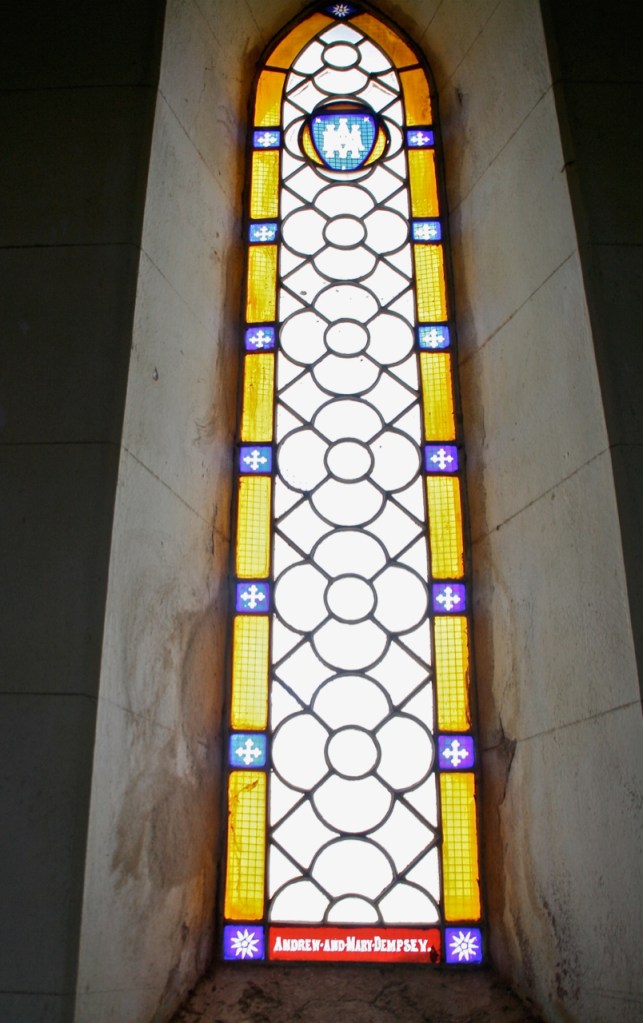
The stained glass window donated to the church by my great-grandparents Andrew and Mary Dempsey

The last Mass was held in the Church in January 1970. More than 50 years since it was closed and 140 or so years since it was built, the Church building, its stained-glass windows and beautiful wood ceiling remain in good condition – a testament to the care with which it was constructed in 1885. The church’s architect was Father John Henry Norton.

John Henry Norton was born on the Ballarat goldfields in 1855. His father was English and his mother was Irish. As a young child he attended a Methodist Sunday School but later turned to his mother’s Catholicism. In 1870 he was received into the Church. Bishop Reynolds of the diocese of Adelaide sponsored his studies for the priesthood overseas. He was a student at St Kieran’s College, Kilkenny for two years and then a seminarian at the Propaganda College in Rome.  He received his Doctorate of Divinity from the College and was ordained  a priest on 8 April 1882. On his return to South Australia he was appointed to the parish of Petersburg, now Peterborough. Father Norton was responsible for designing several notable buildings in his parish. He was consecrated as Bishop of the then Port Augusta diocese at St Francis Cathedral, Adelaide on 9 December 1906. Bishop Norton had a close connection with the Dempsey family over many years. He officiated at the marriage of my great grandparents Andrew Felix Dempsey and Mary Ann Naughton at St Sebastian’s Church, Peterborough in 1884. He married my grandparents, Patrick Joseph Dempsey and Mary Lilian Howard at Our Lady of Dolours Church, Yongala in 1911. He also officiated at many Dempsey family baptisms and funerals. My mother did not leave behind many precious possessions, but there was one item which was very dear to her: a sepia-toned picture of the Sacred Heart in an oak frame which was a gift from Bishop Norton to my grandparents on their wedding day. My mother said in her memoir that the picture has a great deal of meaning for her and expressed the hope that some member of the family would take care of it when she was no longer able to do so.

Eventually my great grandfather Andrew Felix gave up trying to farm in the Hundred of Paratoo. His land was sold for less than the 10 per cent deposit paid on it. The Dempseys moved south and started anew, farming on land sub-divided on Old Canowie Station, between Whyte Yarcowie and Jamestown. Andrew Felix Dempsey purchased a property of 800 acres near Whyte Yarcowie for my grandfather. Grandpa was not given the land; he gradually repaid his father and by 1924 had succeeded in doing so.

My grandparents moved to this farm following their marriage in 1911. This is where my mother spent her childhood in great comfort and security. “It seemed to me, as a child, that the farm and home might well have been there for centuries. That’s how secure everything seemed to be.”
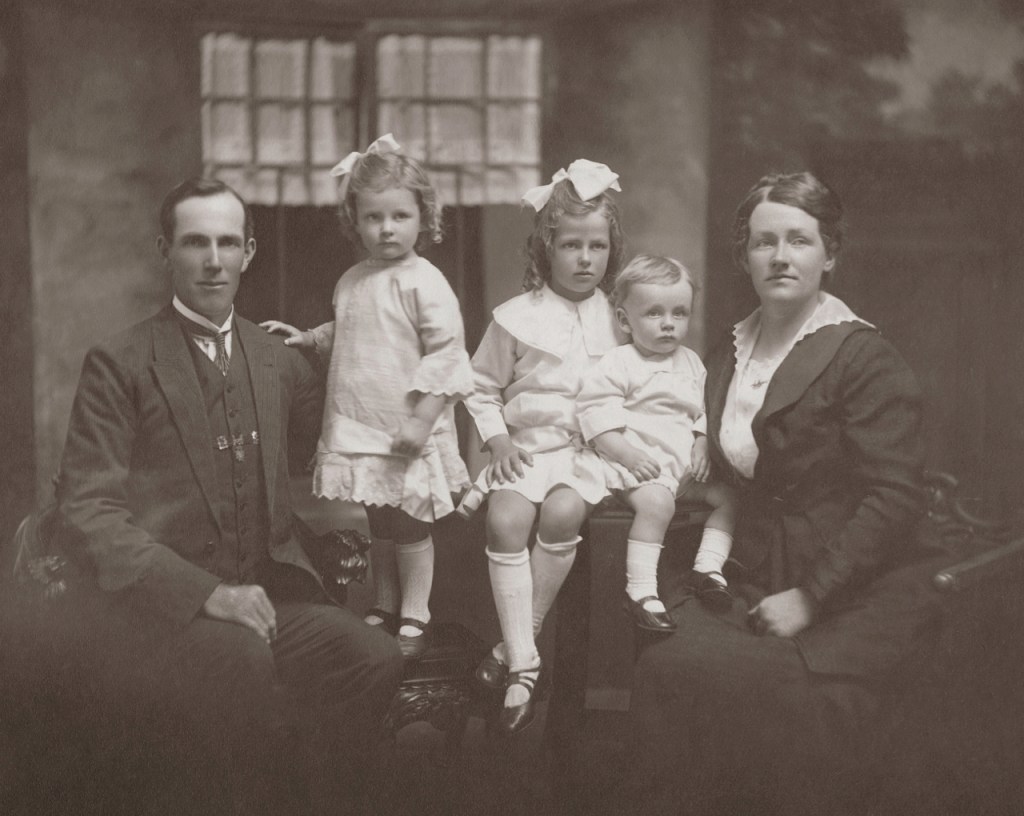
My grandparents Patrick Joseph Dempsey and Mary Lilian Howard with their children (left to right) Mary (my mother), Patricia and John. Photograph circa  1917-1918.

My grandfather had great devotion to Our Lady of Mount Carmel. His birthday coincided with her Feast Day and he named his farm near Whyte Yarcowie “Carmela” in her honour. He never forgot the church of his childhood. On the occasion of the closing of the church in January 1970, he wrote an article in the Witness, the monthly newspaper of the Port Pirie Diocese, expressing his sorrow. He recounted some amusing anecdotes about his days serving as an altar boy. He recalled that when he was a student at the Dawson Public School (the Catholic school had closed because of drought) the school had over 60 pupils on the roll book and “now there is no one living in the township of Dawson. What a mistake was made when the Government in defiance of the advice that Goyder gave them that they should not cut up for closer settlement any land outside Goyder’s line of rainfall. And now the lovely building is to be abandoned.” According to another correspondent in the Witness, Cardinal Norman Gilroy, during the time he spent as Bishop of Port Augusta 1935–1937,  was reported as saying that the Dawson church was like a small Cathedral in a desert.

A year following the closure of the Church my grandfather died aged 84 at the Little Sisters of the Poor, Myrtle Bank, Adelaide.

Sources

1.       ‘Bruce Swann: Australian realist landscape artist, 1925–1987’. Estate of Bruce Swan, https://www.bruceswann.com/landscapes.html

2.       Data SA, ‘Our Lady of Mount Carmel Church’, SA Heritage Places Database Search, https://maps.sa.gov.au/heritagesearch/HeritageItem.aspx?p_heritageno=16010

3.       Margaret M. Press, John Henry Norton: 1855–1923 Bishop of Railways, Wakefield Press, Kent Town, 1993.

4.     Joseph Dempsey, A Tribute to our Pioneer Ancestors: The Dempsey family in South Australia, Walkerville, 18 November 1933.

5.       Mary Imelda Dempsey, Carmela, a memoir, February–April 1995

6.       Witness. Catholic Monthly Newspaper of the Port Pirie Diocese. Vol XVI, No. 1, Pt Pirie, January 1970, p. 4

The Voyage of the Constance

The continuing story of the emigrants from the Shirley estate

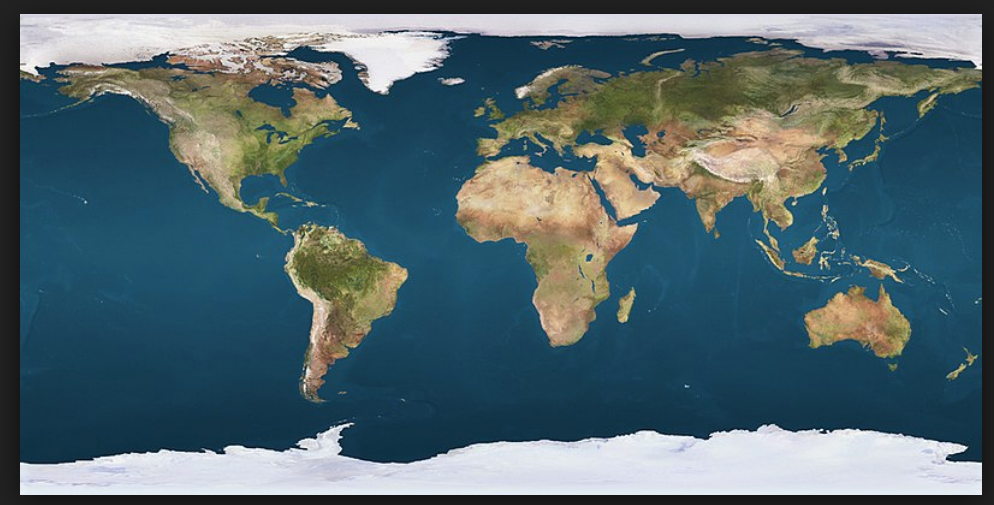
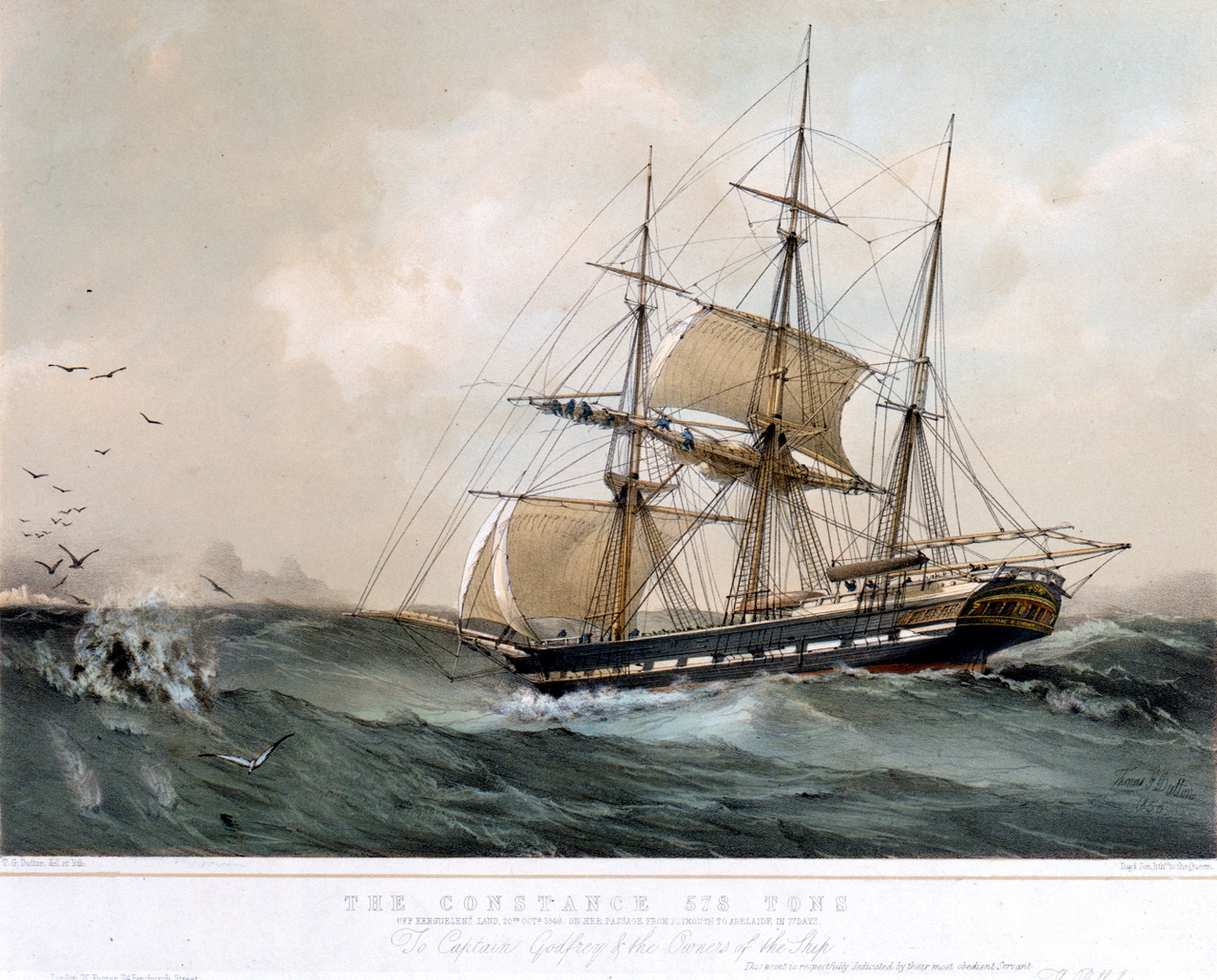
The arrival of the Constance at Port Adelaide on 5 November 1849 caused a sensation in the shipping world. It had sailed in the record breaking time of 77 days, when the norm was closer to 120 days. It was the first (and last) government chartered vessel to sail the far southern latitudes of the Great Circle route. The British Admiralty was subsequently to prohibit government ships from sailing into the higher freezing latitudes close to the Antarctic. Of such fame was the voyage of the Constance that a painting of the ship was commissioned in 1853. It is held in the National Library of Australia.

Constance painting
The Constance, 578 tons, off Kerguelens Land, 20th October 1849, on her passage from Plymouth to Adelaide in 77 days. The artist was Thomas G Dutton.   Out of copyright. 

A voyage to forget

The voyage did not begin well. Within four days of leaving Plymouth on 19 August, there was sickness on the ship. Fever, diarrhoea, cholera and pleurisy had spread among the passengers. Before three weeks had elapsed, general sickness prevailed on board. The first death occurred only eight days after the voyage had started.

The Shirley emigrants from County Monaghan probably had no experience of sea travel. Not only was their journey from Plymouth to Adelaide an ordeal, but their passage from Dublin to Plymouth was not a good omen for what lay ahead of them. The surgeon superintendent on the Constance was later to report that the Shirley passengers had suffered severely from sea sickness on a rough Dublin–Plymouth steamer passage. Their relief at ultimately arriving on dry land in South Australia must have been immense.

For unknown reasons, Captain G B Godfrey decided to take the Great Circle Route, sailing down the coast of Brazil and South America into the higher latitudes close to the Antarctic, then east, where the ship caught the strong winds known as the “roaring forties” which blow around the Antarctic. Icebergs can occur at any time of the year but especially between May and October, making the area even more treacherous for shipping. The captain achieved a record sailing time, but the lives of the crew and passengers were put at risk.

clipper route to adelaide
Source https://goo.gl/images/ErKCs4

It is difficult to imagine what it must have been like for the passengers as the Constance battled mountainous seas and freezing temperatures in the southern latitudes. They would have stayed below deck, listening as the ship creaked and groaned and possibly wondering if the end of their days was nigh. It must have been a relief for them when the Constance sailed into the calm waters of St Vincent’s Gulf, and they were able to go on deck, see blue sky and feel the warmth of the sun.

Twenty three deaths, mainly from cholera, occurred during the voyage, a 9.4 per cent loss rate for the ship.[1] There was only one other ship with a higher death rate among 323 government-assisted voyages to South Australia between 1848 and 1885. It is remarkable that under epidemic conditions, the surgeon superintendent on board was able to contain the number of deaths to twenty-three. After arrival the passengers on the Constance declared their gratitude to the surgeon-superintendent for his attention.

Were they the victims of a nautical experiment or did illness on board influence the decision of the captain to sail the Great Circle Route? It is possible that if the captain had taken the usual but longer route, down the coast of Africa, round the Cape of Good Hope, and crossing the Indian Ocean, the death toll could have been higher.

Four more people died immediately after disembarking in Adelaide. Eleven others still suffering from fever were taken to the government funded Adelaide hospital. On recovery they were housed in the government Immigration Depot with their families. Another sixteen were visited at their lodgings by the Colonial Surgeon because the hospital was full.

Scapegoating the Shirley emigrants

The Destitute Board in Adelaide, which bore the cost of looking after the sick emigrants, was overwhelmed by the arrival of the Constance. The Board complained to Lieutenant Governor Sir H.E.F. Young, pointing the blame for the level of sickness amongst the passengers at the emigrants from the Shirley estate.

A great increase to the numbers receiving relief from the Destitute Board has taken place since the arrival of the “Constance” on 5th November, with Government emigrants. The greater part of the emigrants by this vessel were Irish and I am informed were in a very emaciated state when put on board in Plymouth in consequence of which low fever to a great extent, prevailed on board all the voyage . . . I am informed that nearly half those people were from one estate in Monaghan, and I beg leave to express an opinion that such a selection is highly objectionable, for considering the wretched state to which the peasantry of the south of Ireland have been reduced by famine and disease, it is not probable that a number of Irish emigrants, especially if taken from one neighbourhood, will be of that healthy and robust character so requisite in persons selected with the view of supplying the colony with an eligible description of labourers.

When I first read this critique, I pictured my ancestors disembarking in a bedraggled and emaciated state. And indeed, Peter Holland was admitted to Adelaide Hospital on 30 November, suffering continuous fever after 21 days in the colony.[2] Yet the criticism turned out to be unfair. Of the twenty one deaths on board, only four were from the Shirley emigrants: one adult woman and three children. Evidence was later produced that the Shirley emigrants had satisfied health criteria before departure.

The criticism of the Shirley emigrants received a strong rebuttal from the Shirley’s shipping agent in South Australia, in a letter to the Colonial Lands and Emigration Commission in London. In his letter, which is rather full of bluster and hyperbole, he denounced any claims that the Shirley estate was responsible for off loading persons unfit for such a voyage.

 ‘Mr Shirley’s emigrants’ letters teem with praises of South Australia: . . . they gloat in anticipation of their saving money, remitted it to their relatives, and being joined by them . . . the people sent by Mr Shirley were neither emaciated, ill provided, or ill suited for the colony of South Australia, but that on the contrary they were rough sturdy labourers, well provided for an ordinary passage to Australia, and I am delighted to assure you, by their letters, a well employed happy, moneymaking lot’.[3]

The journey of the Shirley emigrants on the Trafalgar in December 1849 was closer to the norm: their journey took 105 days and there was only one death on board.

There were no further efforts made to send out emigrants in a group from the Shirley estate to South Australia. Individuals and families later emigrated, following relatives who had preceded them, but there was no further organised emigration.Thereafter emigration to the United States became the most convenient and popular destination for all concerned.

There is a touching appeal from a tenant, Owen Corrigan, written from the workhouse in Carrickmacross to Evelyn John Shirley in 1852. Members of his family had sailed on the Trafalgar in December 1849:

I beg to remind you that in the month of December 1849 you were pleased to emigrate four of my family to Adelaide in Australia for which act you have earned their most fervent blessing as they state it’s second to no other country in the world . . . Shortly after they landed there they sent me [a sum of money] on receipt of which I moved my family from the Workhouse and did not return until I could hold out no longer.

His appeal for assistance to emigrate to South Australia was granted.

An ancestral bond is formed

Among the other Irish emigrants on the Constance was a family from County Tipperary: Cornelius Guidera, aged 24, Margaret Guidera aged 18, and Johanna Guidera age 13. Their story will follow in my next blog post.

There are no records to tell us what happened to these young people, the Hollands and the Guideras, in the years immediately after their arrival. They arrived penniless and without friends or relatives who could have lent them a helping hand. They would have had no choice but to obtain employment as quickly as they could, for new emigrants were expected to fend for themselves.

Two years after they arrived in South Australia, on 20 February 1852, my great great grandparents George Holland and Margaret Guidera were married at a Catholic Church in Adelaide. Their daughter Margaret was my great grandmother. She was born in 1861 on the family farm near Stanley Flat, a few miles north of Clare. I shall follow their story another time.

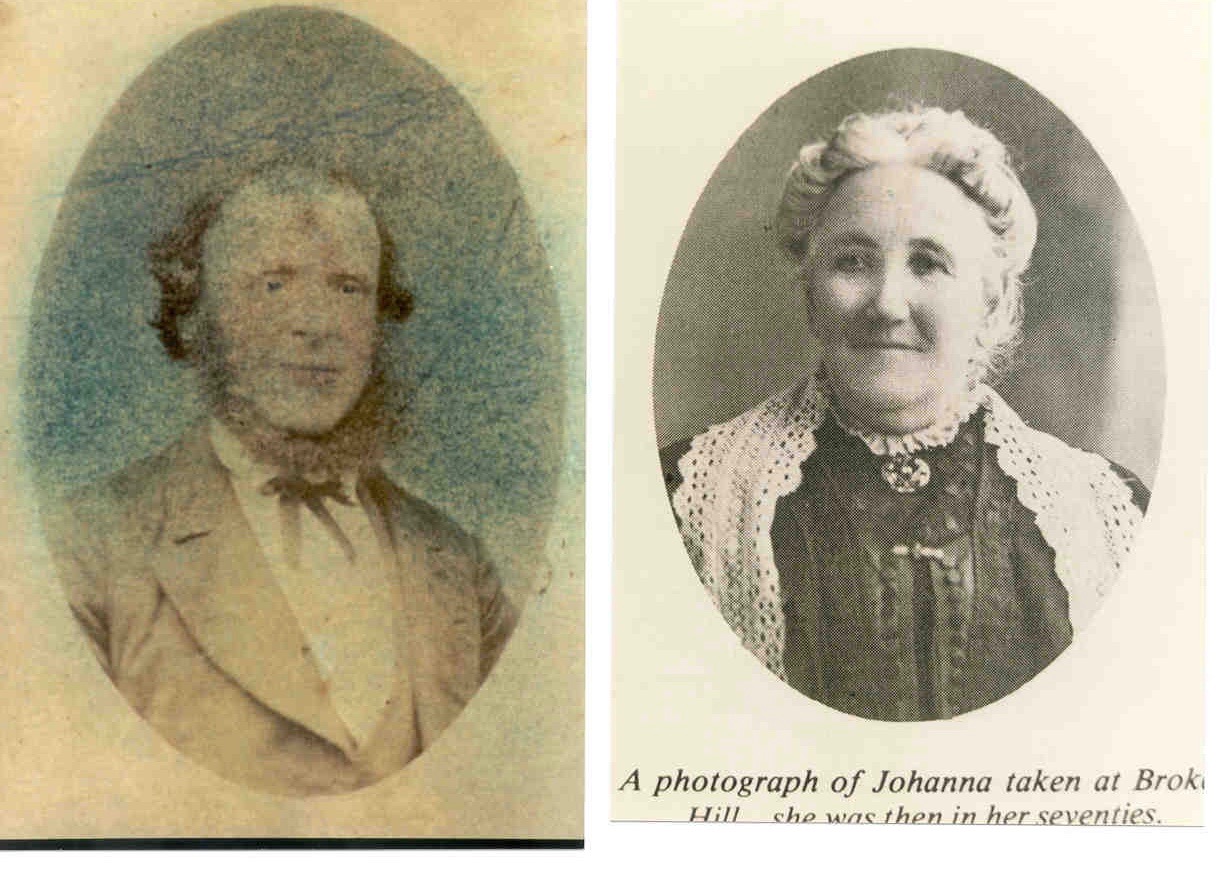
Peter Holland & Johanna Guidera
Peter Holland and Johanna Guidera.  The date of Peter’s photograph is unknown. The photograph of Johanna was taken in Broken Hill when she was in her seventies.

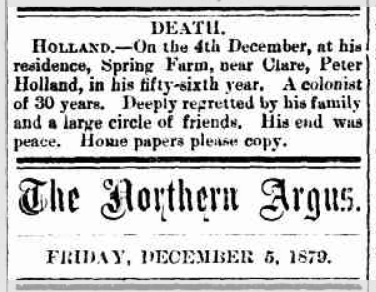
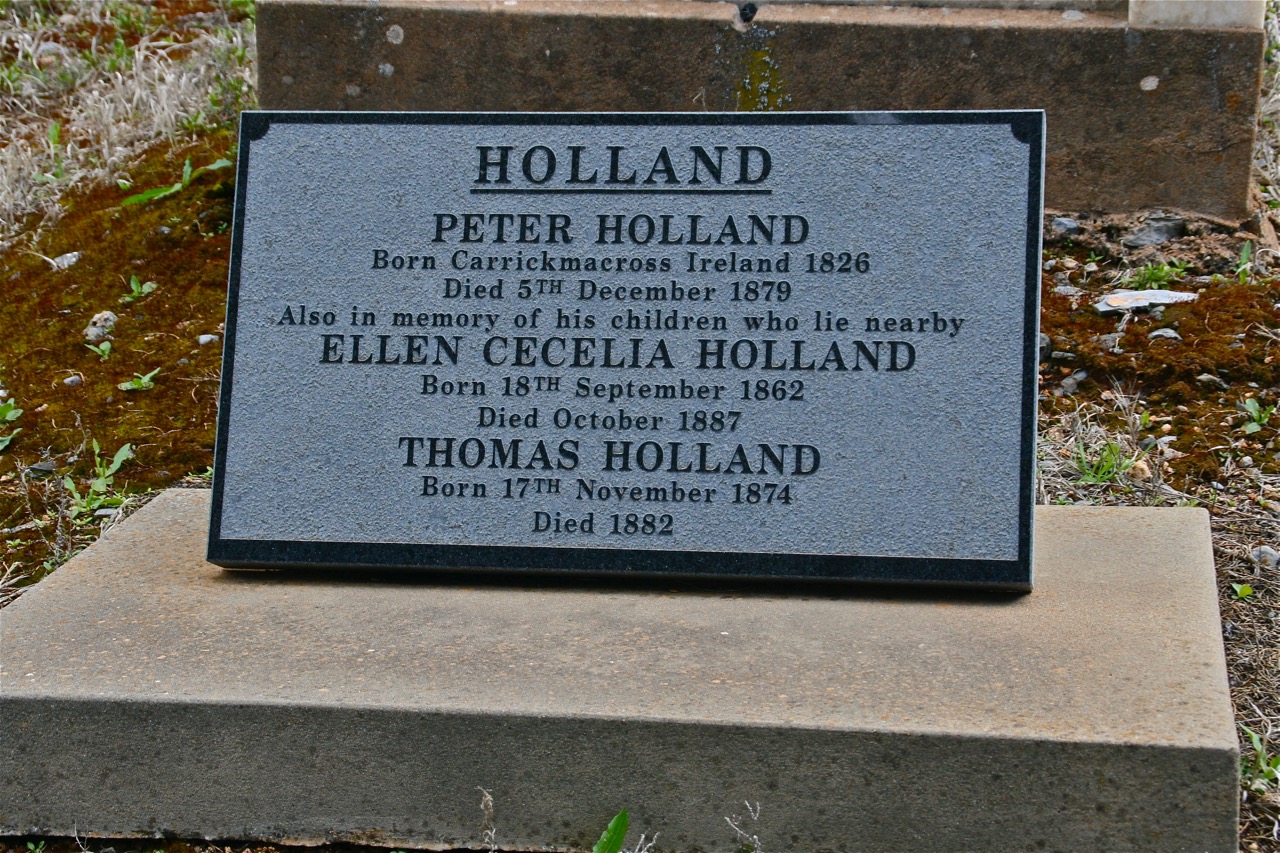
These two families were joined together in another marriage, when Peter Holland married Johanna Guidera on 26 January 1854 at St Patrick’s Church, Adelaide. Peter and Johanna were to have fifteen children. Peter died aged 53 (not 56 as appeared in the death notice in The Northern Argus, the local Clare newspaper). Their youngest child was only two years old. Johanna was left to raise her large family on her own. She was much beloved by her children and grandchildren. She died aged 83 in Shepparton, Victoria.

holland_peter-death-notice

Peter Holland grave
Peter Holland is buried on the hillside in the beautiful and historic St Aloysius cemetery at Sevenhill

Celtic Cross Catholic Cemetery Sevenhill
St Aloysius Cemetery, Sevenhill. Many of my relatives lie buried here.                                September 2016.  © Ramesh Thakur

[1] Robin Haines, Doctors at Sea, Emigrant Voyages to Colonial Australia, Palgrave MacMillan, 2005, p.27

[2] Trevor McLlaughlin, Stephanie James and Simon O’Reilley, Migration to Australia mid-nineteenth century: emigration from the Shirley estate at the time of the Famin, Clogher Record, Vol 20, No 2 (2010) p. 313

[3] Lorraine O’Reilly, ‘The Shirley estate 1814-1906 : the development and demise of a landed estate in County Monaghan’, [thesis], Trinity College (Dublin, Ireland). Department of History, 2014, pp 183-4

The Hollands from County Monaghan

George Holland (1829 – 1883) was my maternal great great grandfather. When I began my ancestral journey, I knew nothing about him.

In 2016 when on holiday in South Australia, we stopped on the main road a few kilometres north of Clare, where George Holland had a farm. My great grandmother Margaret Holland was born there in 1861, the 5th child to be born in South Australia. As I gazed at the land that was once their farm, I wondered what their lives were like in 1861.

IMG_0382
The exact location of the Holland farm, Sections 48 and 49 on the road north of Clare. This is what it looked like in September 2016

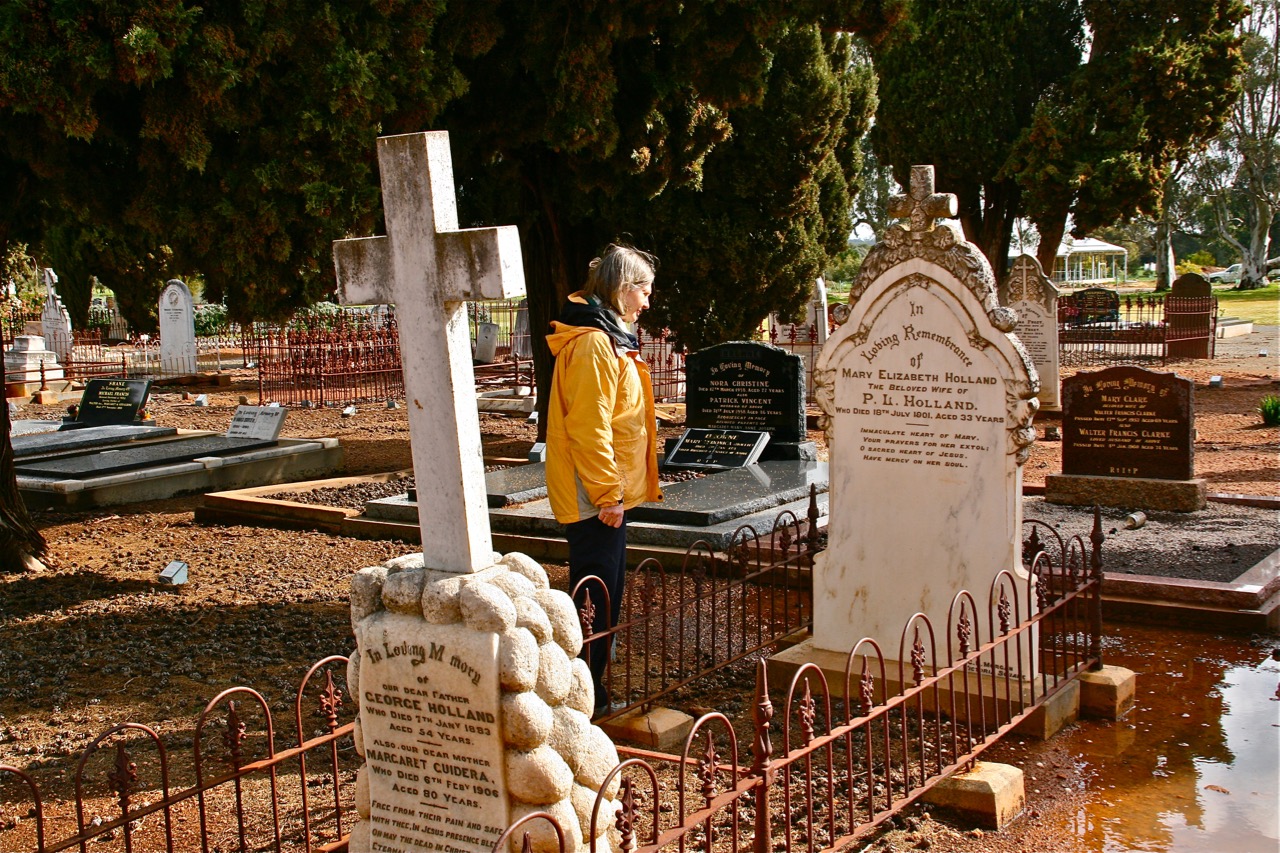
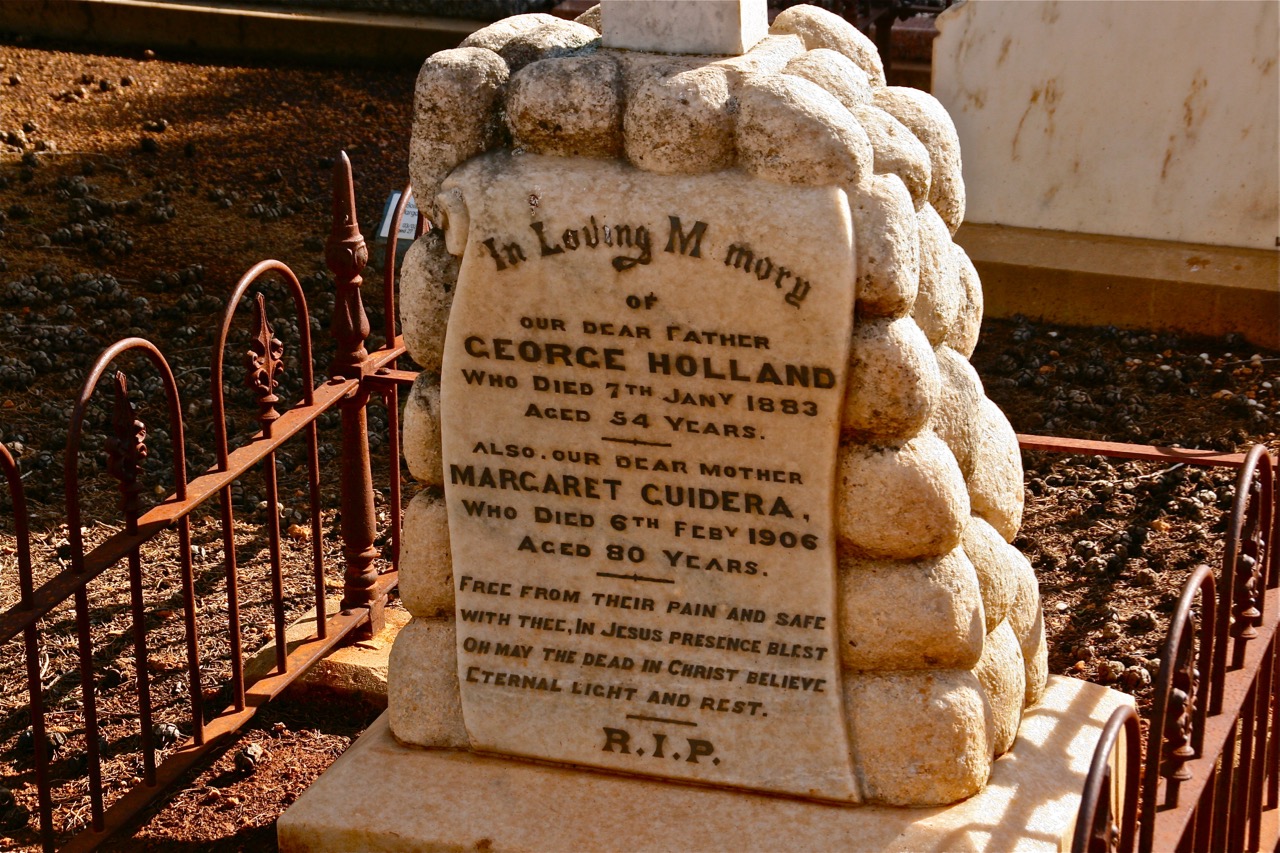
George Holland is buried in the Jamestown cemetery. As I stood beside his grave, I realised how little I knew about his life. What county was he from in Ireland? Why did he emigrate to the far-away colony of South Australia?

Jamestown Cemetery-2
Holland family graves, Jamestown Cemetery

George Holland/Margaret Guidera

Some ancestors are very elusive. It can be very difficult to find any trace of them in the records. This was not the case with George Holland. The Holland family were tenants on the estate of Evelyn John Shirley (1788-1856). This estate was located in the southern part of County Monaghan in the Province of Ulster. It was the largest estate in the county, covering 26,000 acres with a tenant population exceeding 20,000 people in the early 1840s.

As a family history researcher I was delighted to find that a vast archive of documents relating to the affairs of the Shirley estate was deposited in the Public Records Office of Northern Ireland (PRONI) in 1982. The Shirley papers document generations of history across several hundred years. Of particular interest to me was the detailed information on the assisted emigration from the Shirley estate between the years 1843-1854, when 2,000 people were assisted to go to the United States, Canada, England and Australia. Even more importantly, there is material relating specifically to two ships, the Constance and the Trafalgar which carried Shirley emigrants to South Australia in August and December 1849. My ancestor George Holland and his brother Peter were passengers on the Constance.

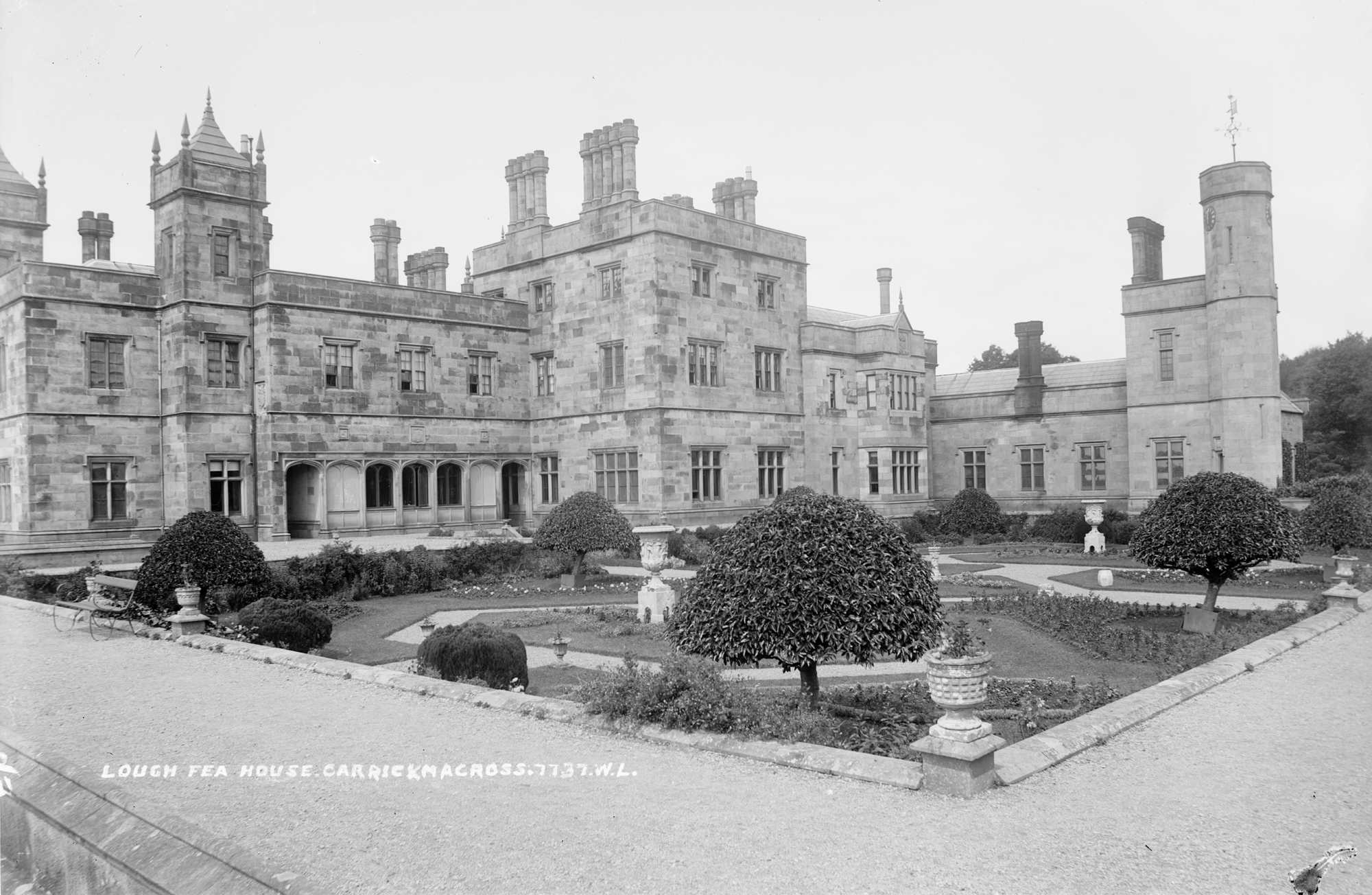
The Shirley estate had been in the hands of the Shirley family since 1646. The original Irish owners of the land were dispossessed in 1576 when Queen Elizabeth I granted this estate and the neighbouring Bath estate to the First Earl of Essex, Walter Deveraux.[1] When the third Earl of Essex died in 1646 leaving no heirs, his estate passed to his two sisters, one of whom was married to Sir Henry Shirley. The Shirleys lived on their English estate, Ettington Park, near Stratford-upon-Avon, County Warwickshire and their estate in Ireland was managed by land agents for hundreds of years. In 1826, Evelyn John Shirley commenced building a mansion on the estate, Lough Fea House, which still stands today. From 1829 onwards, Evelyn John Shirley and his family spent a few months each summer in residence at Lough Fea, though the house was not finally completed until 1837.

Lough Fea House
Lough Fea House, near Carrickmacross, County Monaghan

Source: National Library of Ireland. No copyright restrictions

Background to the emigration of George and Peter Holland

The vast majority of tenants on the estate were living at subsistence level in the mid-19th century. Ninety-three percent of the tenants were Catholic, a proportion utterly different from other large estates in Ulster where most tenants were Protestants. The poor quality of housing meant that diseases such as typhus, dysentery and typhoid fever were common. The agent managing the estate between the years 1830 and 1843, Alexander Mitchell, was a tyrant who was feared and hated. Upon taking up his appointment, he surveyed the estate and increased rents by as much as 30 per cent. He infringed on the tenants’ ancient rights to cut peat on bog land to use for fuel for heating and cooking. He trampled on the rights of the Catholic tenants, particularly in regard to the education of their children, and being the agent of an absentee landlord there was no limit to his authority.

Mitchell died suddenly in 1843 of apoplexy in Monaghan town while attending the Spring Assizes as a member of the Grand Jury. It was recorded that when news of his death made its way to the inhabitants of the Shirley estate, bonfires were lit on every hilltop to celebrate the death of the ‘unscrupulous monster’.[2]

Mitchell’s successor, William Steuart Trench did a survey of the estate in 1843 when he assumed office. He reported that having visited a great number of homes across the estate he found that ‘even in Ireland, it has never fallen to my lot to witness destitution to the same degree and over such a large extent, as I have seen it on this property.[3] Trench was a strong advocate of assisted emigration as a way of reducing the numbers of poor tenants who were a drain on the estate.

Following the passage of the Poor Law in 1838, workhouses were constructed throughout the country to house the poor. The workhouse in Carrickmacross opened in 1840. The Poor Law tax bore most heavily on estates with large pauper populations. Agents and landowners calculated that it would cost less to send paupers to the New World than to maintain them in the workhouse for a year.

The records of those who were assisted refer constantly to the landholding status of the potential emigrant and that he/she will give up the land or has had his/her house knocked down. Among the petitions from the poor seeking assistance to emigrate there are many poignant examples of small farmers who had had their cottages demolished and were left penniless and homeless. Landowners wished to consolidate their estates by getting rid of tenants on the smallest plots of land. Evelyn John Shirley and his agent George Morant were strongly criticised for their eviction policies during the famine.

County Monaghan suffered greatly during the Famine. The population fell by 29 per cent between the years 1841 and 1851, from 200,407 to 141,758.[4] Yet even during the Famine, tenants were being ejected from their homes. Estate papers indicate that between 1846 and 1856, there were over 650 ejectment processes served on tenants. In the decade 1841-51 the population of the Shirley estate decreased by 44 per cent while the number of houses decreased by a substantial 42 per cent.[5] It is difficult to comprehend the suffering which lies behind these figures.

Some of those emigrants who were ‘key’ tenants from the point of view of farm consolidation on the estate, had to be coaxed and cajoled to go. This was especially true of the earlier forties, and of the Australian emigration in 1849.[6]

The policy of assisted emigration left an indefinable scar on local folklore. It was often depicted as highly exploitative of pauper tenants who were ‘exiled’, ‘rejected’, ‘dispossessed’ and ‘exterminated’ from their land.[7] This may not be entirely true. It was the memory constructed by those left behind and does not reflect the level of popular support for assisted emigration at the time. This support is evident in the numerous petitions to the Shirley estate office by people appealing for assistance to emigrate.

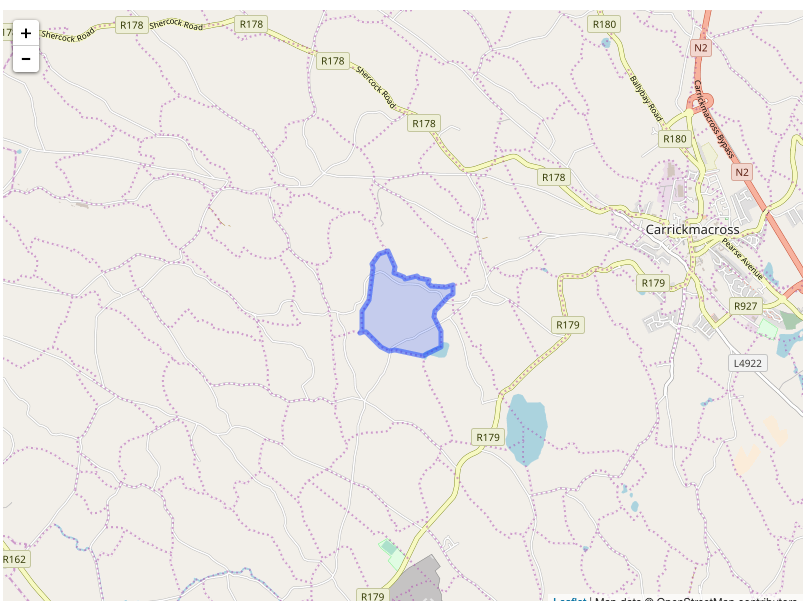
 George Holland was born on 23 June 1829 in the townland of Latinalbany, near Carrickmacross. His parents were Patrick and Catherine Holland.

Latinalbany
The townland of Latinalbany, in the civil parish of Magheross. The size of the townland was 182 acres.  Source: https://www.townlands.ie/monaghan/farney/magheross/carrickmacross-rural/latinalbany/

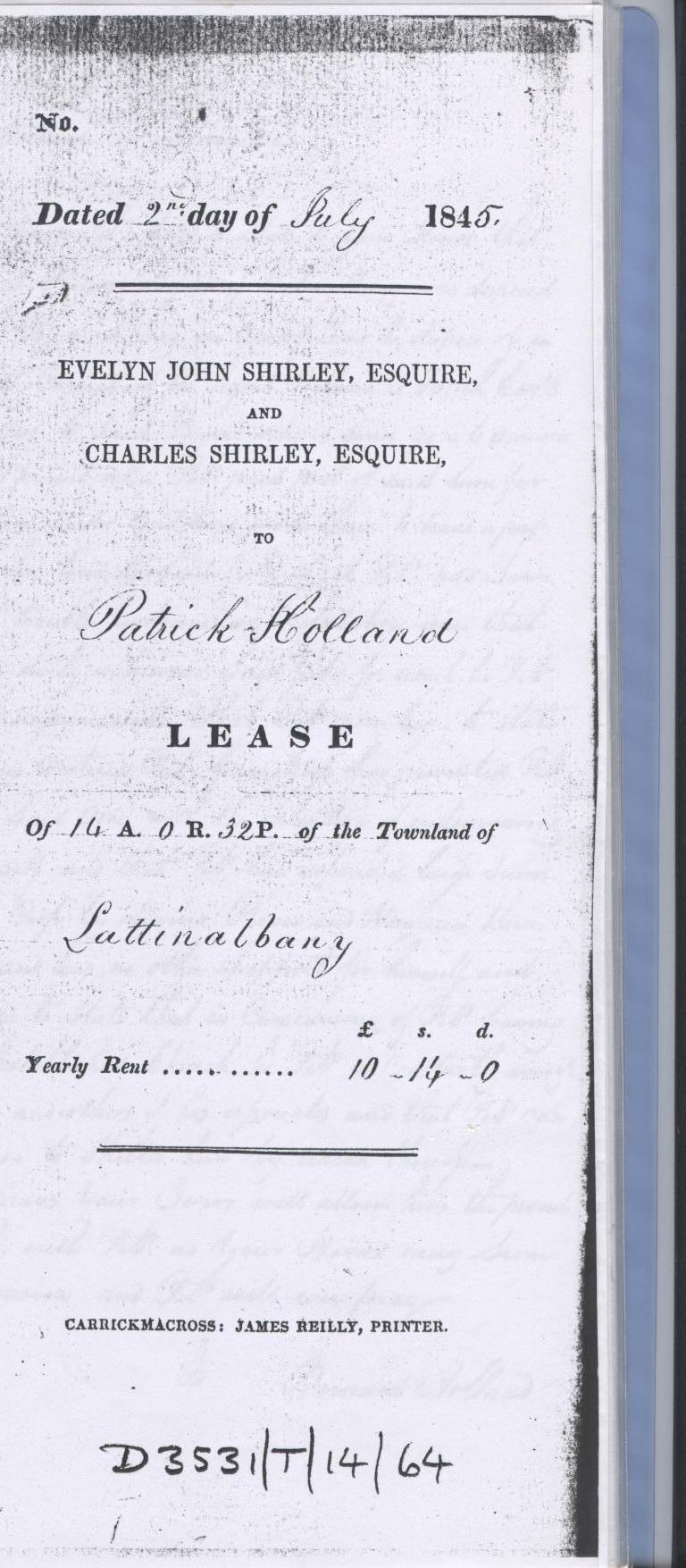
There is a document, dated 2 July 1845 granting Patrick Holland a lease for 16 acres, 32 perches in the townland of Latinalbany for a yearly rent of £10-14-0. Patrick Holland died sometime before December 1846. A cottier named Patrick Byrne then lived on the property. He was a son- in- law of Patrick Holland.[8]Patrick Holland Shirley estate

In 1849 the names of Peter, George and Ellen Holland appeared on a list of emigrants for South Australia. Beside their names was written “10 acres”, presumably the amount of land that had been given up. Assisted migrants were drawn largely from among the sons and daughters of small farmers.[9] Irish immigrants to Australia were not drawn from the poorest of the poor.

Although Ellen’s name was on the list, she did not go. She was aged 17 at the time. Perhaps she decided to stay behind to care for her widowed mother. Catherine Holland died in 1852, three years after her sons left for South Australia. At some point Ellen emigrated to the United States, where she died in Pittsburgh, Pennsylvania on 25 July 1890 aged 58.

I wondered why South Australia was chosen as a destination for the Shirley emigrants, and not New Zealand or one of the other Australian colonies. The answer may lie with the family connection which Evelyn John Shirley had with the colony. In 1843 his daughter Louise Shirley had married Neill Malcolm, 13th Laird of Poltalloch estate in Argyllshire, Scotland. In 1839 Malcolm had purchased 4,000 acres of land in South Australia near Lake Alexandrina which he had named Poltalloch Station. Because of this large land purchase, Evelyn John Shirley was allowed to nominate emigrants from his estate at minimal cost. The emigrants to South Australia were subsidised by the Colonial Land and Emigration Commission in London. The cost to the Shirley estate was only £2 per head for the fare.

I do not know if Peter and George had to be persuaded and cajoled to go to South Australia or if they went willingly. The list of tenants selected to emigrate to South Australia began with 335 names, but in the end only 140 people left, 95 of whom were on the Constance. The Shirley estate agent George Morant said in writing to London on 28 July I know not what the government may think of our failure in providing the full complement of Emigrants but if the people are fools enough to refuse they can not be compelled…..There could be numerous reasons why the number of selected emigrants fell so dramatically but I suspect some of them may have been reluctant to go to a destination on the far side of the earth.

The Colonial Land and Emigration Commission  required all emigrants bound for South Australia to be properly outfitted for the journey. The clothing requirements each emigrant had to meet before boarding the ship proved to be more costly than the Shirley estate had anticipated.[10] There were also other sundry expenses such as sheets, towels, soap and luggage boxes. The correspondence reveals that outfitting the emigrants was very troublesome for the agents and the preparations were somewhat frantic. They regarded the regulations as red tape, but their successful implementation meant that there were no coffin ships to Australia, as there were to North America.

Finally, on the morning of 14 August 1849, the departing emigrants were gathered for inspection in Carrickmacross. I imagine that it was with heavy hearts that Peter and George said goodbye to their mother and sister. The emigrants then travelled to Dundalk where they took a train for the short journey to Drogheda. They stayed overnight at lodgings in Dublin and from there they sailed to Plymouth, where they boarded the Constance on 19 August 1849.

Little did the departing passengers know that a horrendous voyage lay ahead of them, a voyage which became infamous in the history of sailing to Australia in the 19th century and became the subject of several official enquiries. George and Peter were to meet their future wives on the voyage of the Constance, young sisters from County Tipperary. But that is the subject for another story.

Griffith’s Valuation in the 1850s and the 1901 and 1911 Census returns reveal that many Hollands continued to live in the vicinity of Carrickmacross, including Latinalbany townland itself. Perhaps I may meet some distant Holland relatives when I visit Carrickmacross.

[1] http://www.irishidentity.com/stories/shirley.htm

[2] http://www.irishidentity.com/stories/shirley.htm

[3] Lorraine O’Reilly, ‘The Shirley estate 1814-1906 : the development and demise of a landed estate in County Monaghan’, [thesis], Trinity College (Dublin, Ireland). Department of History, 2014, p 131

[4] Ibid, p 191

[5] Patrick J Duffy ‘ “Disencumbering our crowded places”; theory and practice of estate emigration schemes in mid-nineteenth century Ireland’ in Patrick J Duffy (ed) To and From Ireland: Planned Migration Schemes c.1600-2000 (Dublin, 2004), p. 102

[6] Patrick J Duffy, Assisted Emigration from the Shirley Estate 1844-1854, Clogher Record, xiv (2), (1992), p. 17

[7] O’Reilly, op cit, p 192

[8] PRONI catalogue number D3531/S/58 (1844): Book recording names of tenants in occupation on the Shirley estate.

[9] Trevor McLaughlin, Stephanie James, Simon O’Reilly, Migration to Australia mid-nineteenth century: emigration from the Shirley Estate at the time of the Famine, Clogher Record, xx (2) (2010),  p.290

[10] Each of the males were allocated 5 shirts, 5 pairs of stockings, 2 pairs of shoes, 1 jacket, vest and trousers and 1 ‘suit reserved’. The females were allocated 5 shifts, 5 pairs of stockings, 2 pairs of shoes and one gown and petticoat each.